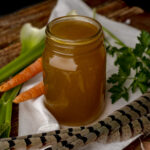

Crockpot Pheasant Stock
Flavorful homemade stock is a great way to fully utilize your game bird harvest. Keep this stock on hand for soups, pot pies, and more!
Servings: 10 cups
Calories: 36kcal
Equipment
- nut milk bags optional
Ingredients
- 12 pheasant legs (or legs and breasts, or whole pheasant)
- 6 large carrots
- 6 stalks celery (leaves attached)
- 1 medium onion
- 3 bay leaves
- ½ cup apple cider vinegar
- 1 teaspoon salt
- ½ teaspoon black pepper
- 1 cup mushroom stems (optional)
- 3 cloves garlic, smashed
- ½ bunch Italian parsley
Instructions
- Bring a large pot of water to boil. Add pheasant legs and boil for 20 minutes to remove any off flavors, blood, etc.
- Remove pheasant legs from water and place in a crockpot. Discard water.
- Wash carrots, celery and trim as needed. You can leave the peels on the carrots as long as the peels are clean.
- Wash onion and cut roots and top off. Cut into quarters.
- Place carrots, celery, onion, garlic, mushroom stems, bay leaves, salt, pepper, and vinegar in crockpot. Cover with water, about 12 cups.
- Turn crockpot on high until stock is simmering, about 2 hours.
- Reduce heat to low. After 2-3 more hours, remove pheasant legs and remove the meat from the bones. Place meat in an airtight container and refrigerate for another use (like soup!).
- Place bones, tendons, and skin (if you have it) back in the crockpot. Continue cooking on low for 20 hours (24 hours total cooking time).
- Add parsley 1 hour before cooking time is completed.
- Strain stock using a fine mesh strainer lined in cheesecloth or paper towels. You can also strain the stock with a nut milk bag (linked above).
- Pour stock into jars and let cool at room temperature for 30 minutes to an hour.
- You can pressure can the stock or freeze it. If you're freezing the stock, let it cool completely in the fridge before freezing. This will help prevent jars from cracking.
- Stock will also last up to a week in the fridge.
Notes
- If using whole pheasant, use 2 pheasants. Remove breast meat after 30 minutes of cooking or until breast meat is cooked through.
- If using breasts and legs, use 4-6 legs and 4-6 breasts. Remove breast meat after 30 minutes of cooking or until breast meat is cooked through.
- Mushroom stems are optional but they add a lot of umami flavor to stocks and broths. Next time you're cooking with mushrooms, remove the stems and store them in the freezer for future batches of stock.
- You can use vegetable scraps instead of whole vegetables for making stock. Keep a large zippered bag in the freezer and add vegetable scraps to it over time. Once it's full, you're ready to make stock!
- Nut milk bags are a great option for straining stock because they strain more quickly than paper towels but are just as effective at removing small grainy particles. They are also reusable so they can help reduce waste!
Nutrition
Calories: 36kcal | Carbohydrates: 2g | Protein: 4g | Fat: 1g | Saturated Fat: 0.4g | Polyunsaturated Fat: 0.2g | Monounsaturated Fat: 1g | Cholesterol: 10mg | Sodium: 248mg | Potassium: 100mg | Fiber: 0.4g | Sugar: 1g | Vitamin A: 1047IU | Vitamin C: 3mg | Calcium: 10mg | Iron: 0.3mg
To see the web version with photos, tips and FAQs, scan the QR code or visit:
