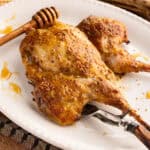

Roast Pheasant with Honey Mustard Glaze
An easy, flavorful roast pheasant recipe featuring a juicy brined bird, even cooking from spatchcocking, and a sweet-tangy honey mustard glaze.
Servings: 4
Calories: 204kcal
Equipment
Ingredients
Pheasant + Brine
- 1 whole pheasant, bone-in, skin on
- 2 quart water
- ½ cup kosher salt
- ¼ cup brown sugar
Honey Mustard Glaze
- 1 tablespoon spicy brown mustard
- 1 tablespoon stone ground mustard
- 1 tablespoon honey
- 1 tablespoon white balsamic vinegar
- pinch kosher salt
- pinch black pepper
Instructions
Spatchcock the Pheasant
- Place the pheasant breast-side down on a cutting board so the backbone is facing up. Using sharp kitchen shears or poultry shears, cut along one side of the backbone from neck to tail. Repeat on the other side and remove the backbone.
- Flip the bird over and press firmly on the breastbone with the heel of your hand until it cracks and the pheasant lies flat. Gently pull the legs outward so they extend fully. Optional: Flip the bird back over and secure the legs and wings by threading two skewers across the back of the bird in an “X” pattern: through a thigh, then under the opposite wing, and repeating on the other side.
Brine the Pheasant
- In a large stockpot, combine the water, salt, and brown sugar. Bring to a boil, then let it cool slightly before transferring it to a nonreactive container. Allow the brine to cool to room temperature, then submerge the whole pheasant. Cover and refrigerate for 12 hours.
- Remove the pheasant from the brine, rinse under cold water, and place on a cooling rack set over a sheet pan. Pat dry thoroughly, then refrigerate uncovered for 2-12 hours to help the skin dry out.
Roast the Pheasant
- Preheat the oven to 350°F. Line a sheet pan with aluminum foil and lightly grease it with olive oil.
- In a small bowl, whisk together all ingredients for the honey mustard glaze. Set aside.
- Place the pheasant, breast-side up, on the prepared pan. Drizzle lightly with olive oil and rub it all over the skin. Roast for 10 minutes.
- Increase the oven temperature to 425°F (use convection if available). Brush the pheasant with half the honey mustard glaze and roast for another 10 minutes.
- Brush with the remaining glaze and continue roasting for 10–15 minutes, or until the thickest part of the pheasant breast reaches an internal temperature of 160°F.
- Let the pheasant rest for 5-10 minutes before carving. Enjoy!
Notes
- A bone-in, skin-on pheasant works best for roasting. Because pheasant is a naturally lean game bird, the skin helps lock in moisture while the brine and glaze add flavor. You can use a whole pheasant with the skin removed, but just know the final result will turn out a little differently.
- A simple mix of kosher salt, water, and brown sugar seasons the meat all the way through and helps lock in the juices during roasting. It also gently enhances the bird's natural flavor without overpowering it.
- A blend of spicy brown mustard, stone ground mustard, honey, white balsamic vinegar, salt, and pepper creates a sweet-tangy glaze that caramelizes beautifully in the oven and complements the mild flavor of pheasant.
- Dry the skin well: Leaving the pheasant uncovered in the refrigerator helps create beautifully crisp, golden skin.
- Don't skip the brine: Pheasant is very lean. Brining ensures it stays juicy, not dry.
- Use convection if available: It helps the glaze caramelize and the skin crisp up.
- Check temp early: Every pheasant is different in size and fat content, so begin checking around the 25-30 minute mark.
- Save the carcass: Make pheasant stock for soup!
Nutrition
Calories: 204kcal | Carbohydrates: 6g | Protein: 22g | Fat: 9g | Saturated Fat: 3g | Polyunsaturated Fat: 1g | Monounsaturated Fat: 4g | Cholesterol: 69mg | Sodium: 704mg | Potassium: 257mg | Fiber: 0.3g | Sugar: 6g | Vitamin A: 178IU | Vitamin C: 5mg | Calcium: 19mg | Iron: 1mg
To see the web version with photos, tips and FAQs, scan the QR code or visit:
