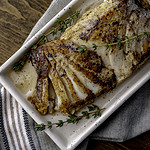

Sous Vide Halibut
Firm-fleshed halibut is effortlessly softened through sous vide cooking. The result is a perfectly cooked piece of fish that flakes easily and melts in your mouth.
Servings: 2
Calories: 289kcal
Ingredients
- 2 halibut filets (preferably thick filets, 8 oz each)
- salt and pepper, to taste
- 1 teaspoon lemon zest
- 3 tablespoon salted butter, divided
- 4 sprigs thyme
- 2 cloves garlic, smashed
Instructions
- If your halibut filets have the skin on, remove it with a filet knife. Remove any bones.
- Pat the halibut filets dry with paper towels. Season all over with salt, black pepper, and lemon zest.
- Place the seasoned halibut filets in small individual vacuum bags. Place ½ tablespoon of butter, 2 sprigs of thyme, and 1 clove of garlic per filet/bag.
- Seal the bags with a vacuum sealer. Refrigerate the bags of halibut for 3-4 hours before cooking. This allows the salt to tenderize the fish.
- Fill a large pot or other large container with water. Heat the sous vide machine to 125°F. Place the bags with halibut in the heated water bath and cook for 1 hour.
- Remove the bags from the water bath. Remove the halibut filets from the bags and pat them dry with paper towels.
- Heat a cast iron skillet over medium-high heat. Add 2 tablespoons of butter to the pan and let it melt.
- Place halibut filets in the hot skillet and cook for 1-2 minutes per side or until the outside has been browned. Use a fish spatula to carefully flip the fish in the pan.
- Remove the filets from the pan. While the halibut rests, drizzle the hot butter from the pan over the top and a squeeze of fresh lemon juice. Let the fish rest for 5 minutes before serving. Enjoy!
Notes
- You can use any firm, white fish fillets (like cod or seabass) you have available to you in place of halibut.
- It's important to not add too much acid to the fish while it cooks, otherwise it can become mushy. This recipe uses a small amount of lemon zest during the cooking process with a squeeze of lemon juice at the end to brighten the flavor.
- You can use other fresh herbs like rosemary or oregano in place of thyme. You can also omit the herbs completely.
- While using the sous vide method without a vacuum sealer requires a bit more effort, you can accomplish it. The water displacement method uses water to remove the air from a ziploc bag instead of using a vacuum bag.
- Using a machine eliminates the guesswork in sous vide cooking by maintaining the water at a precise temperature, but you can achieve it without one. Check out this resource on sous vide cooking without a machine.
- A cast iron skillet is the perfect complementary piece of equipment for sous vide cooking. Since the fish is mostly cooked in the sous vide water bath, you need a very hot pan to quickly sear the fish without overcooking it.
- While you can use a normal spatula for flipping fish, I highly recommend investing in a fish spatula if you cook a lot of fish!
- If your vacuum bags have a smooth side and a textured side, make sure the presentation side (top of the fish filet) is on the smooth side for a more polished presentation.
- When using the sous vide cooking method for fish, there's a fine line between perfectly cooked and mushy. Don't cook the fish in the water bath for more than 1 hour for perfectly cooked halibut!
Nutrition
Calories: 289kcal | Carbohydrates: 2g | Protein: 43g | Fat: 12g | Saturated Fat: 6g | Polyunsaturated Fat: 1g | Monounsaturated Fat: 3g | Trans Fat: 0.3g | Cholesterol: 134mg | Sodium: 368mg | Potassium: 1015mg | Fiber: 0.5g | Sugar: 0.1g | Vitamin A: 510IU | Vitamin C: 5mg | Calcium: 33mg | Iron: 1mg
To see the web version with photos, tips and FAQs, scan the QR code or visit:
