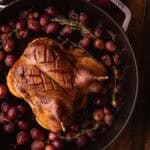

Easy Roasted Duck Recipe with Grapes
An easy roasted duck recipe with crispy skin and balsamic roasted grapes that perfectly complement rich, juicy duck meat.
Servings: 4
Calories: 344kcal
Equipment
Ingredients
Duck + Brine
- 1 whole duck, bone-in, skin-on (about 2 lb)
- ½ cup kosher salt
- ¼ cup brown sugar
- 2 quart water
Other Ingredients
- 1 medium orange, sliced
- 1 lb red grapes
- 5-6 thyme sprigs
- 2 tablespoon balsamic vinegar
- flaked sea salt (optional, for serving)
Instructions
Spatchcock the Duck
- Place the duck breast-side down on a cutting board, with the backbone facing up. Using sharp kitchen or poultry shears, cut along one side of the backbone from neck to tail. Repeat on the other side and remove the backbone.
- Flip the duck over and press firmly on the breastbone until it cracks and the bird lies flat. Gently pull the legs outward so they extend fully.
- Optional: Flip the duck back over and secure the legs and wings by threading two skewers across the back in an “X” pattern: through one thigh, under the opposite wing, then repeat on the other side.
Brine the Duck
- In a large pot, combine the water, salt, and brown sugar. Bring to a boil, then remove from heat and let cool slightly. Transfer to a nonreactive container and cool to room temperature.
- Submerge the duck in the brine, cover, and refrigerate for 12 hours.
- Remove the duck from the brine, rinse under cold water, and place on a rack set over a sheet pan. Pat dry thoroughly, then refrigerate uncovered for 2–12 hours to help the skin dry.
Roast the Duck
- Remove the duck from the refrigerator and let it sit at room temperature for 30 minutes. Using a sharp knife, lightly score the skin and fat in a crosshatch pattern, being careful not to cut into the meat.
- Preheat the oven to 425°F. Lightly grease an enamel cast iron skillet or roasting pan with olive oil.
- Arrange the orange slices and thyme sprigs in the pan. Place the duck breast-side up on top and roast for 10 minutes.
- While the duck begins roasting, toss the grapes with balsamic vinegar.
- Arrange the grapes around the duck and return to the oven. Roast for another 25–30 minutes, or until the leg meat reaches an internal temperature of 160°F and the skin is golden brown and crispy.
- Let the duck rest for 10 minutes before carving. Finish with a sprinkle of flaky sea salt over the duck and grapes, if desired.
Notes
- This recipe is written for a 2-pound wild duck. For a larger, store-bought duck, start roasting at 350°F for 15-20 minutes, then increase the oven temperature to finish crisping the skin.
- A simple salt-and-sugar brine helps season the meat throughout and keeps it juicy during the high-heat roast. It also improves browning and flavor.
- Red or black seedless grapes work best. As they roast, they soften and burst, creating a sweet contrast to the rich duck. The grape juices blend with the duck drippings, creating an indulgent, sauce-like base.
Nutrition
Calories: 344kcal | Carbohydrates: 23g | Protein: 32g | Fat: 14g | Saturated Fat: 4g | Polyunsaturated Fat: 2g | Monounsaturated Fat: 7g | Cholesterol: 134mg | Sodium: 642mg | Potassium: 234mg | Fiber: 1g | Sugar: 19g | Vitamin A: 134IU | Vitamin C: 7mg | Calcium: 31mg | Iron: 3mg
To see the web version with photos, tips and FAQs, scan the QR code or visit:
