

This roasted duck recipe delivers crispy skin and incredible flavors. Sweet-savory balsamic roasted grapes pair perfectly with the rich duck meat. It's a fast, high-heat method that keeps the meat juicy and flavorful.

TL;DR
This is a quick, high heat roasted duck recipe, not a slow roasted duck. Spatchcocking allows fat to render quickly, the skin to crisp evenly, and the breast meat to stay juicy while the legs cook through. Sweet grapes roasted alongside the duck soak up rendered fat, savory juices, and balsamic, creating an easy addition that feels elegant.
Ingredients
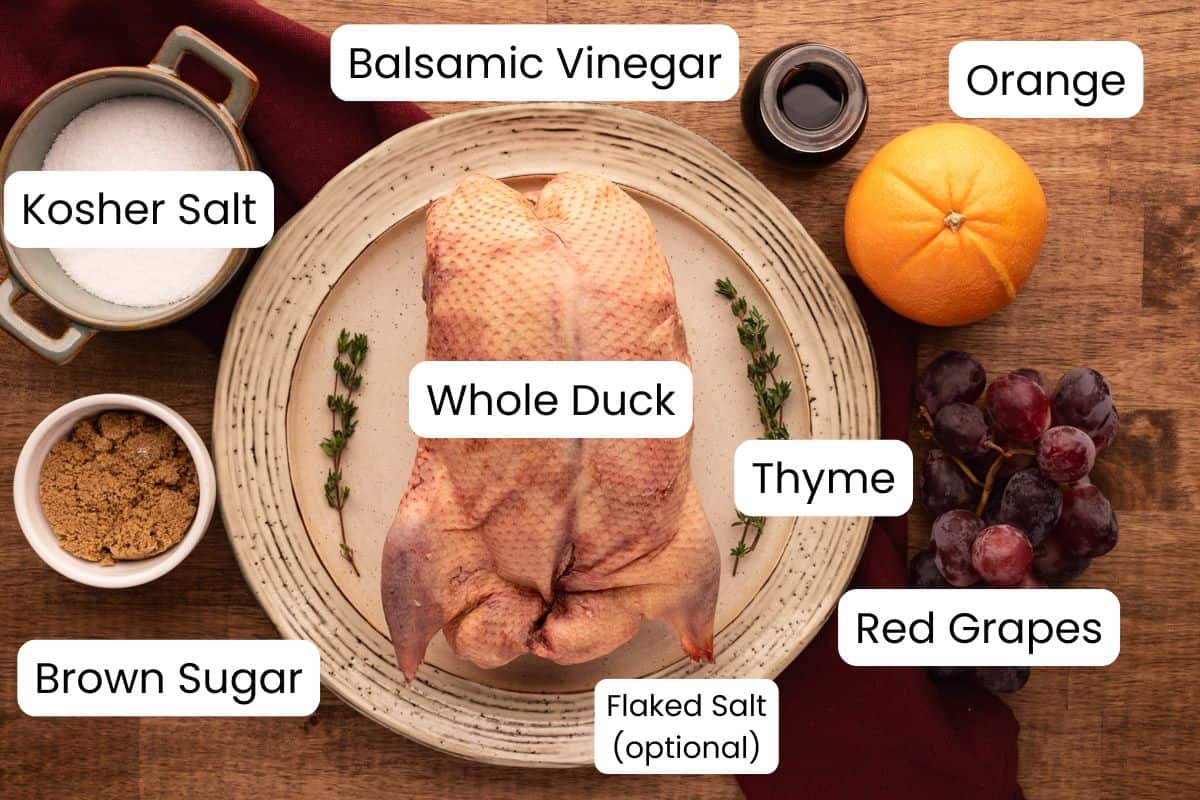
- Whole Duck: This recipe is written for a ~2-pound wild duck. Small, wild ducks are leaner and cook faster than larger store-bought ducks. If using a larger, domestic duck, cooking time and oven temperature will need to be adjusted (see Pro Tips). Try this sous vide duck breast recipe or sous vide duck confit recipe next!
- Brine: A simple salt-and-sugar brine helps season the meat throughout and keeps it juicy during the high-heat roast. It also improves browning and flavor. I like to use the same brine in this roast pheasant recipe.
- Grapes: Red or black seedless grapes work best. As they roast, they soften and burst, creating a sweet contrast to the rich duck. The grape juices blend with the duck drippings, creating an indulgent, sauce-like base.
See recipe card for quantities.
How to Make Roasted Duck
Spatchcocking and brining are key to fast, even cooking and crispy skin. Don't skip them if you want the best results.
Spatchcock the Duck
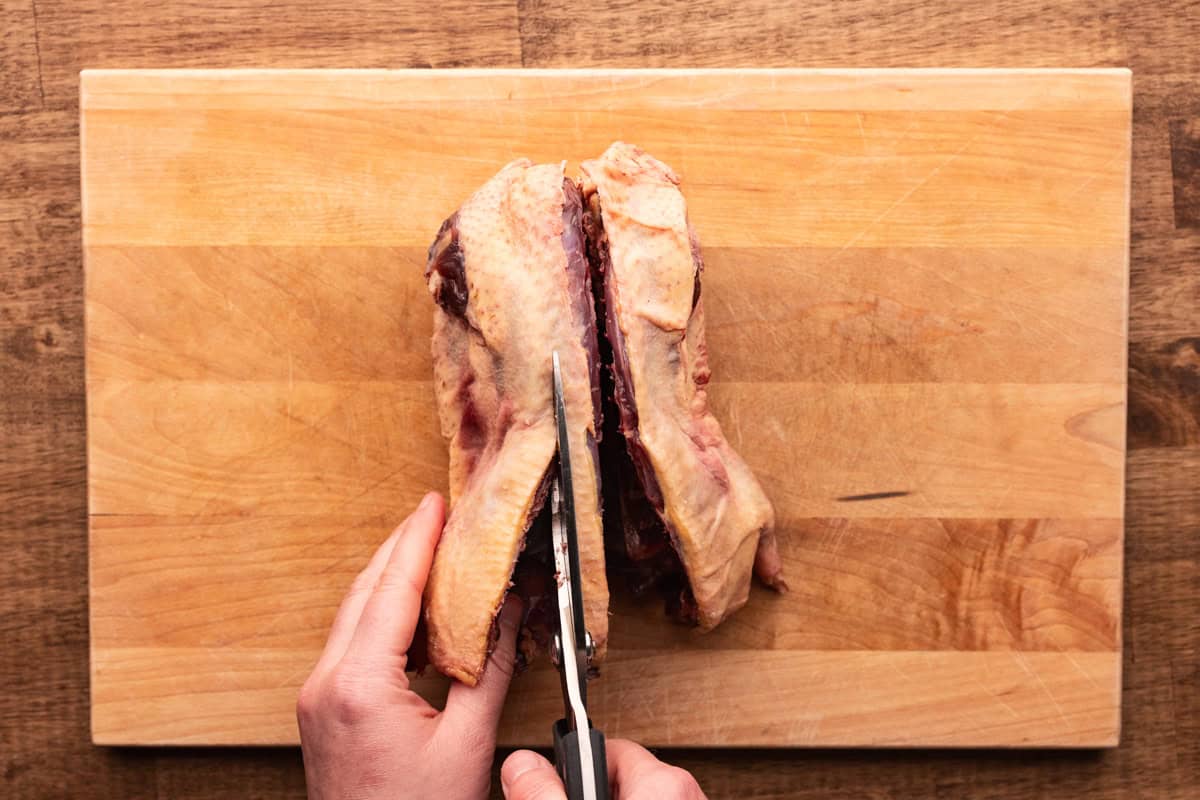
- Step 1: Place the duck breast-side down on a cutting board, with the backbone facing up. Using sharp kitchen or poultry shears, cut along one side of the backbone from neck to tail. Repeat on the other side and remove the backbone.
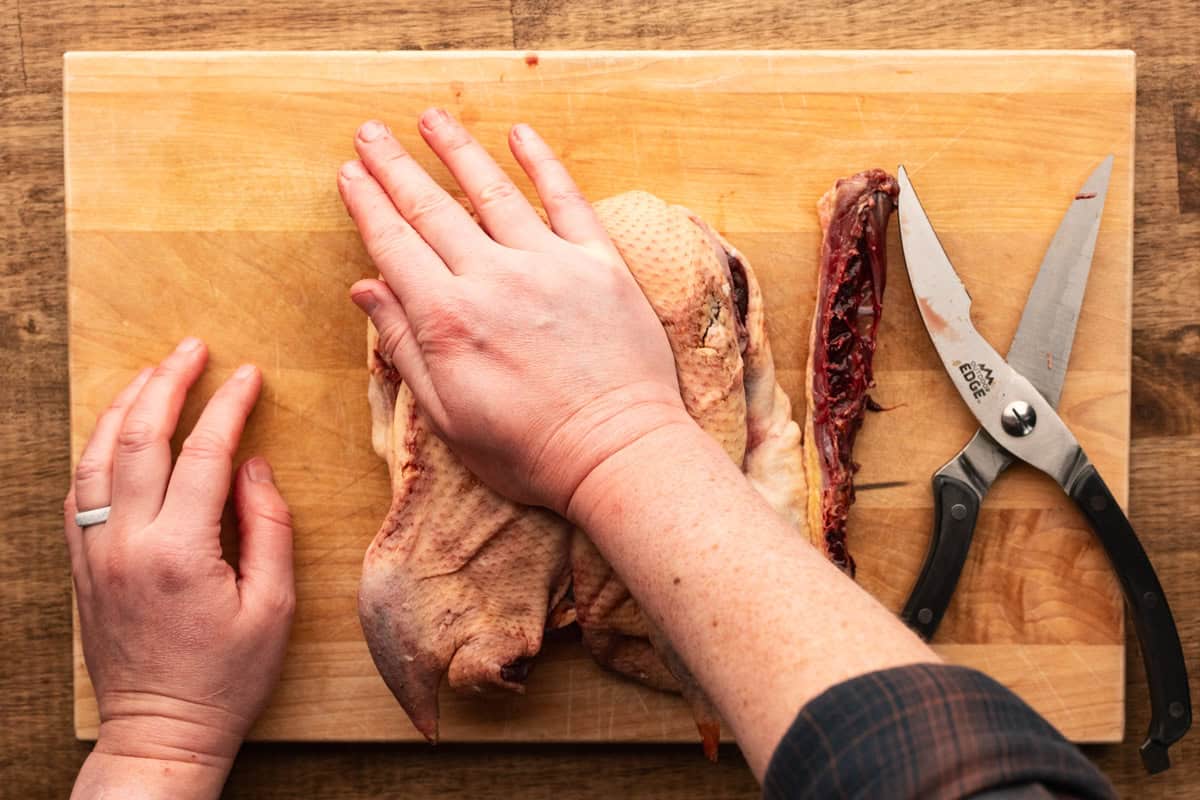
- Step 2: Flip the duck over and press firmly on the breastbone until it cracks and the bird lies flat. Gently pull the legs outward so they extend fully.
Brine the Duck
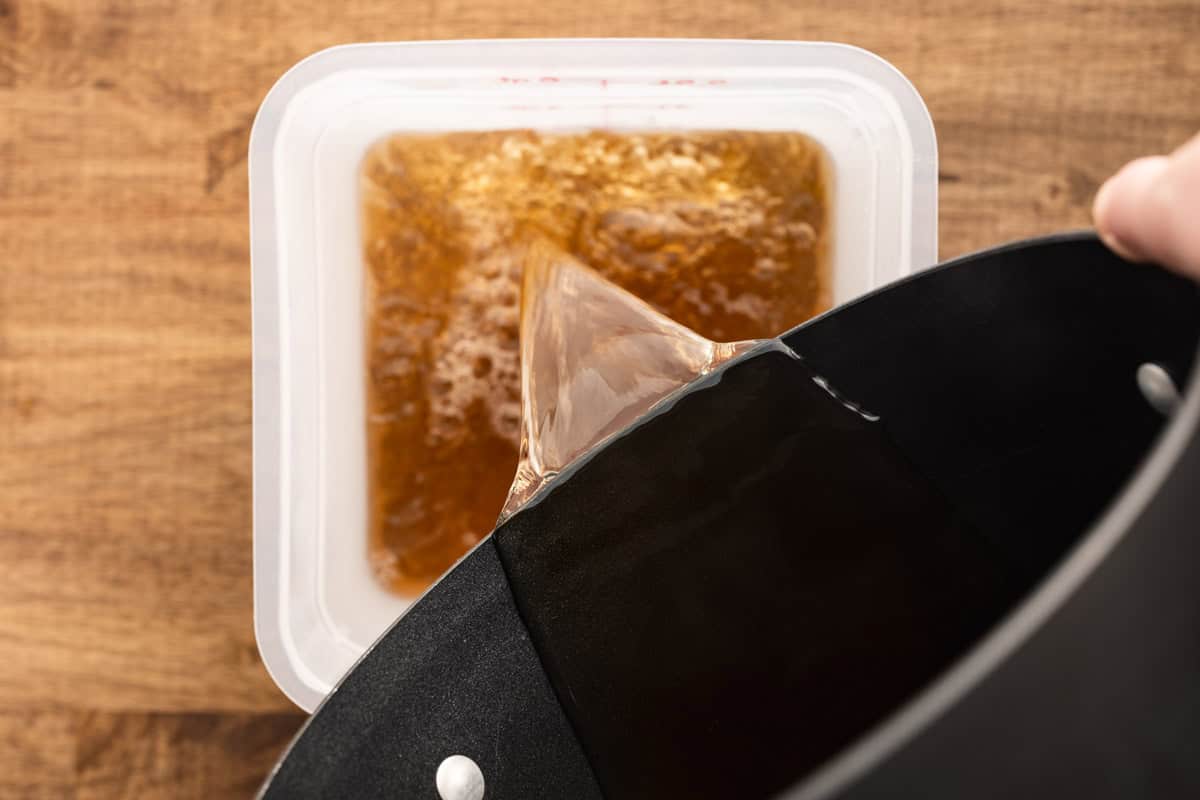
- Step 3: In a large pot, combine the water, salt, and brown sugar. Bring to a boil, then remove from heat and let cool slightly. Transfer to a nonreactive container and cool to room temperature.
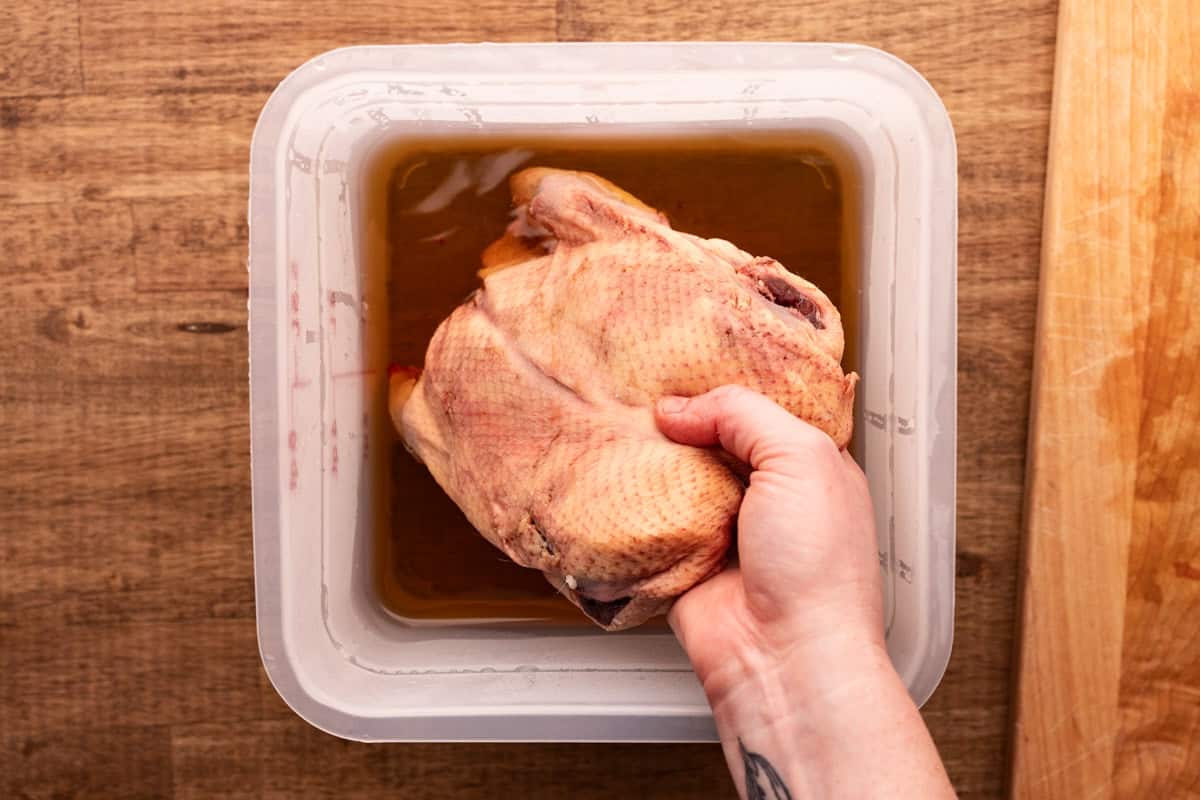
- Step 4: Submerge the duck in the brine, cover, and refrigerate for 12 hours.
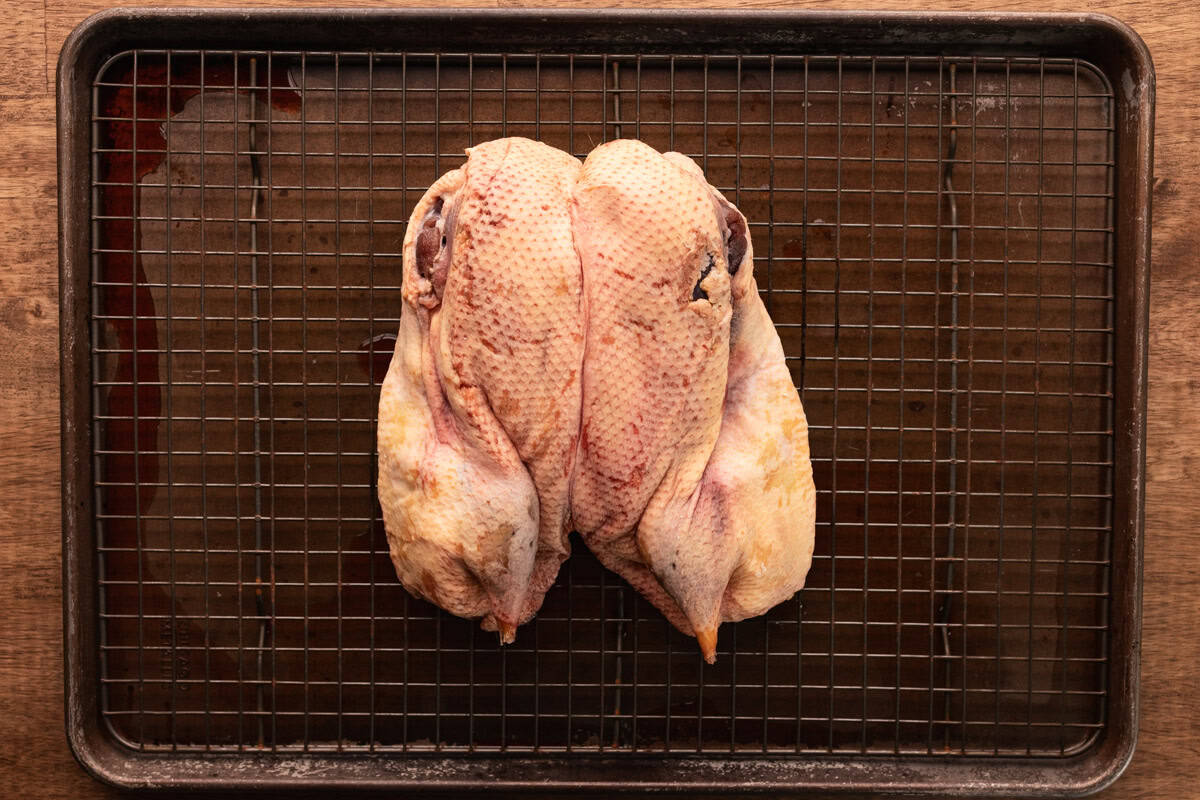
- Step 5: Remove the duck from the brine, rinse under cold water, and place on a rack set over a sheet pan. Pat dry thoroughly, then refrigerate uncovered for 2-12 hours to help the skin dry.
Roast the Duck
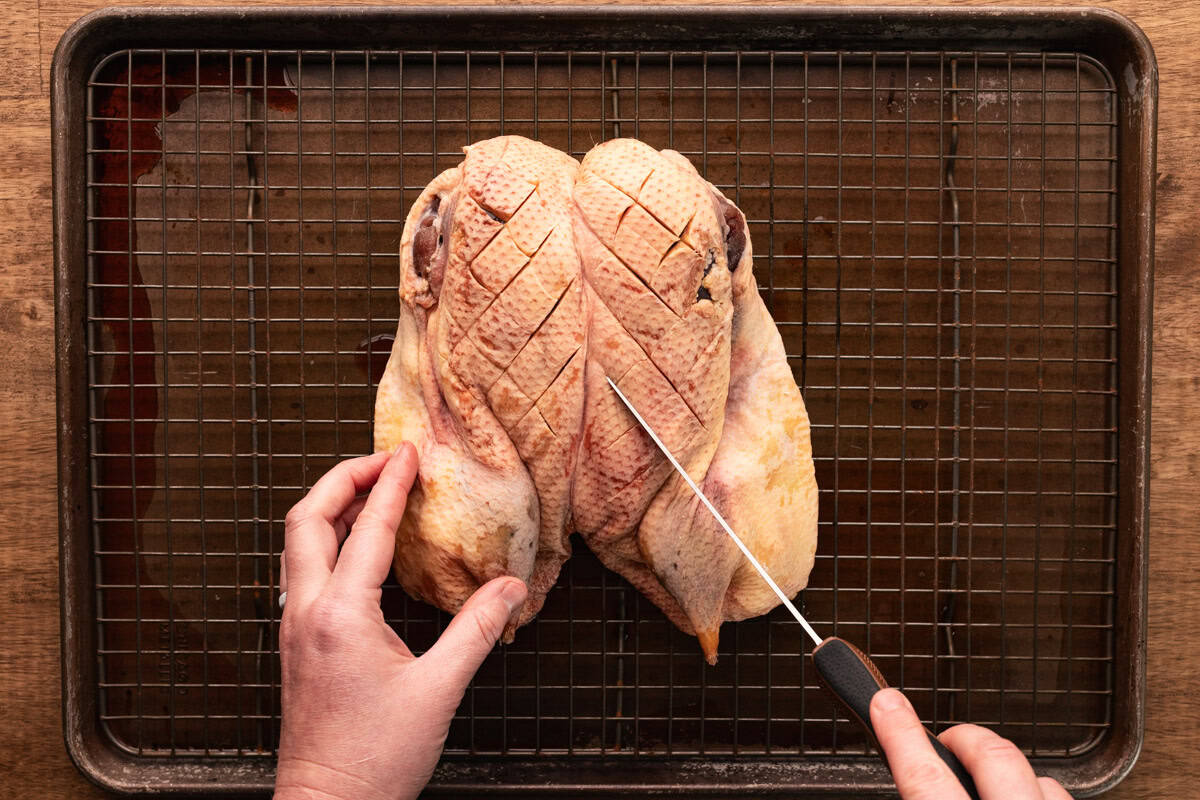
- Step 6: Remove the duck from the refrigerator and let it sit at room temperature for 30 minutes. Using a sharp knife, lightly score the skin and fat in a crosshatch pattern, being careful not to cut into the meat.
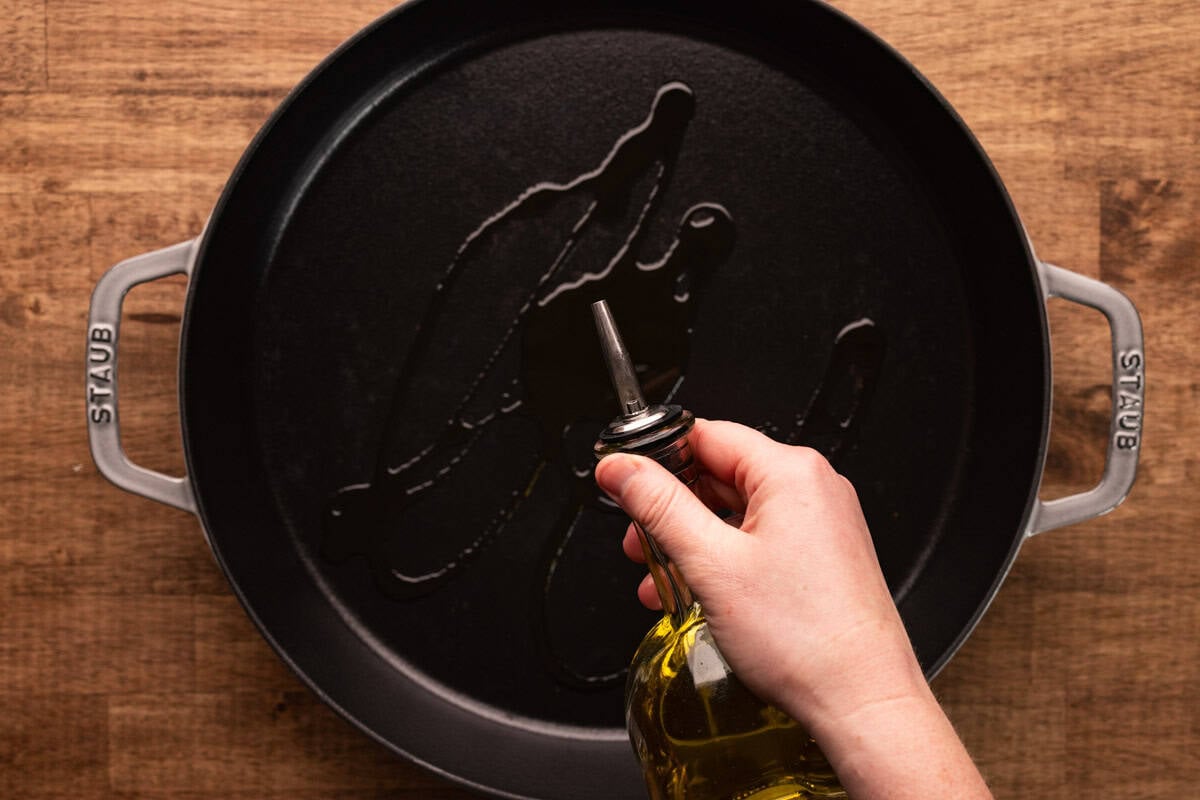
- Step 7: Preheat the oven to 425°F. Lightly grease an enamel cast iron skillet or roasting pan with olive oil.
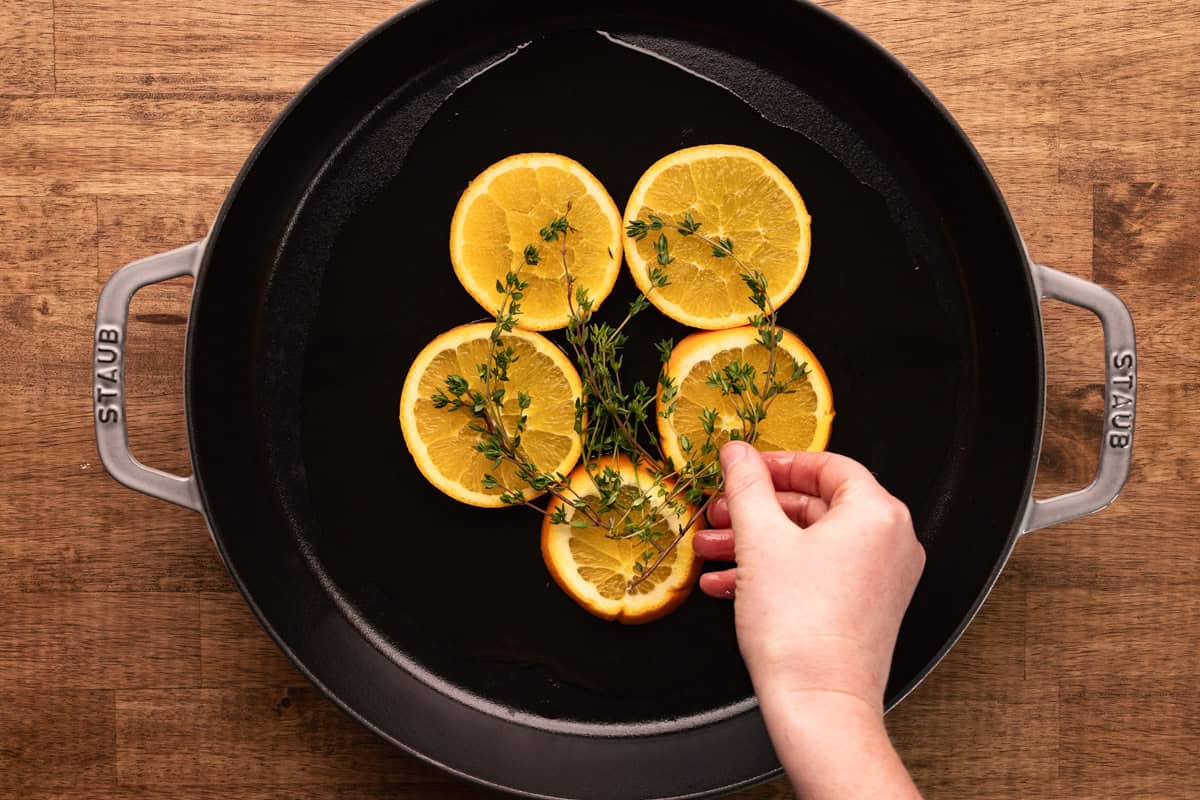
- Step 8: Arrange the orange slices and thyme sprigs in the pan.
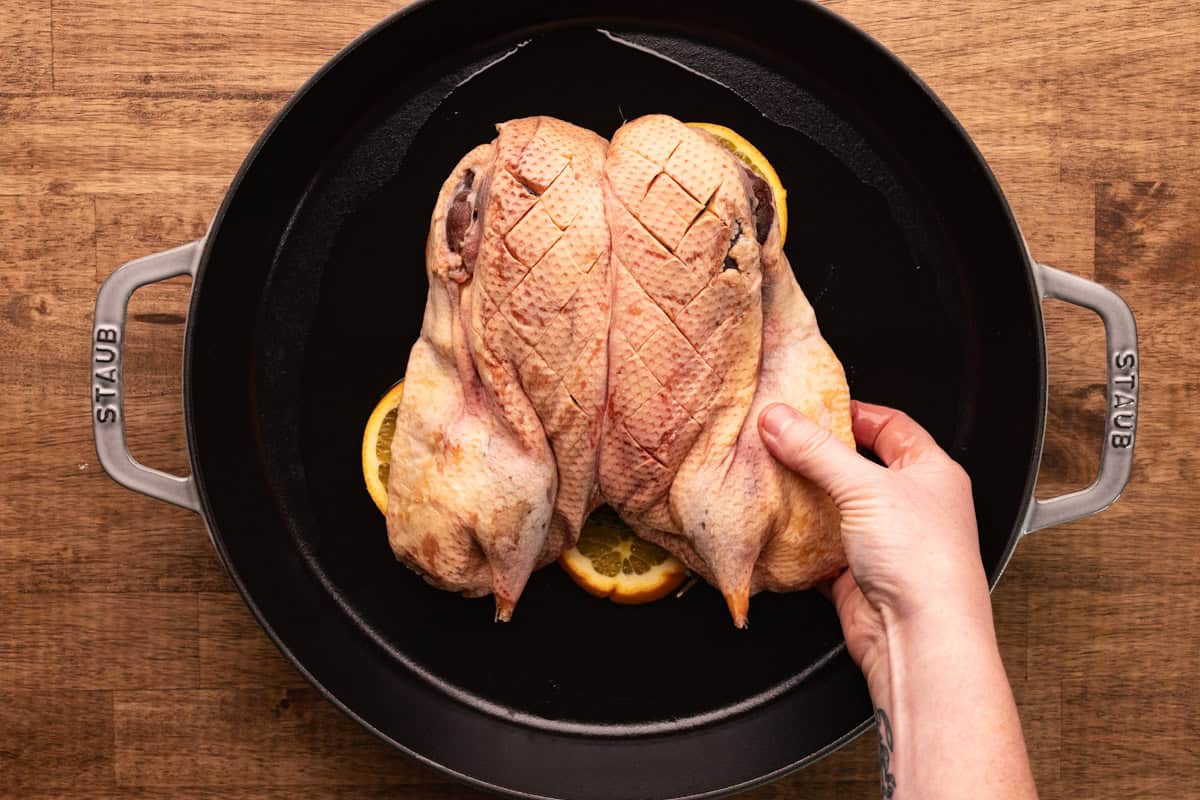
- Step 9: Place duck breast-side up on top.
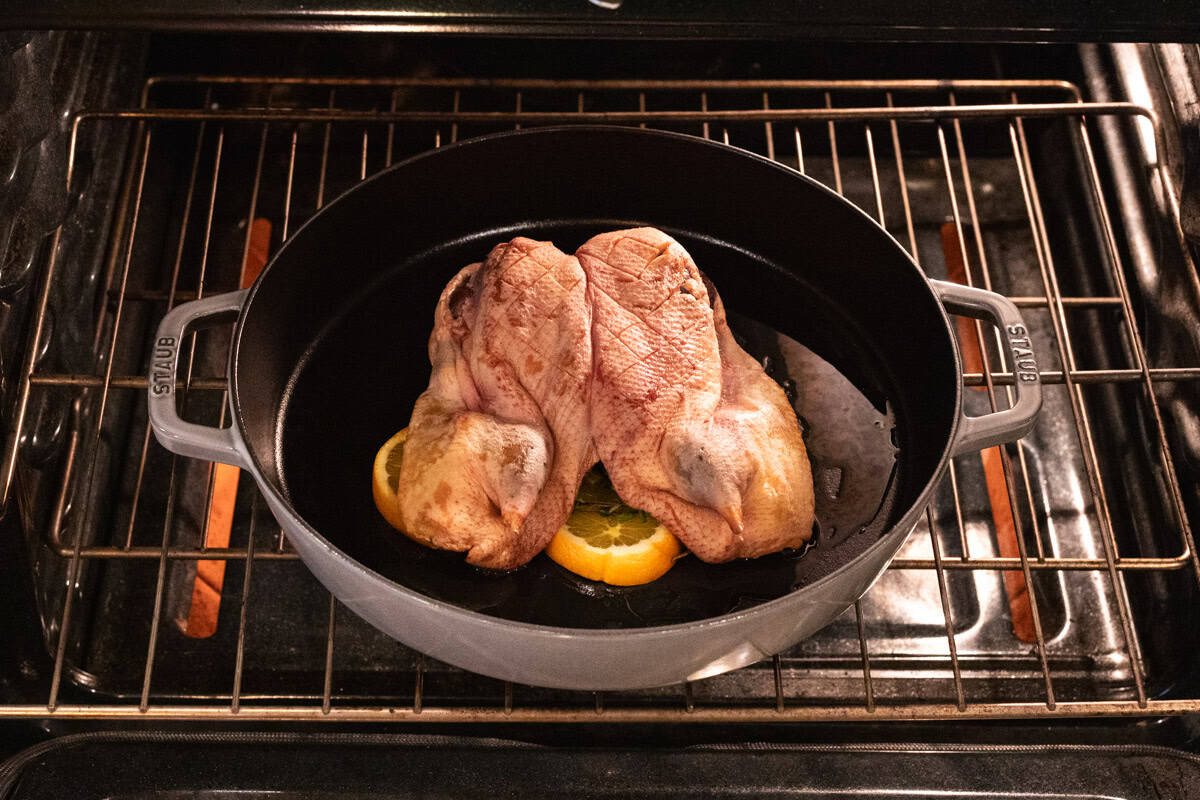
- Step 10: Roast duck for 10 minutes.
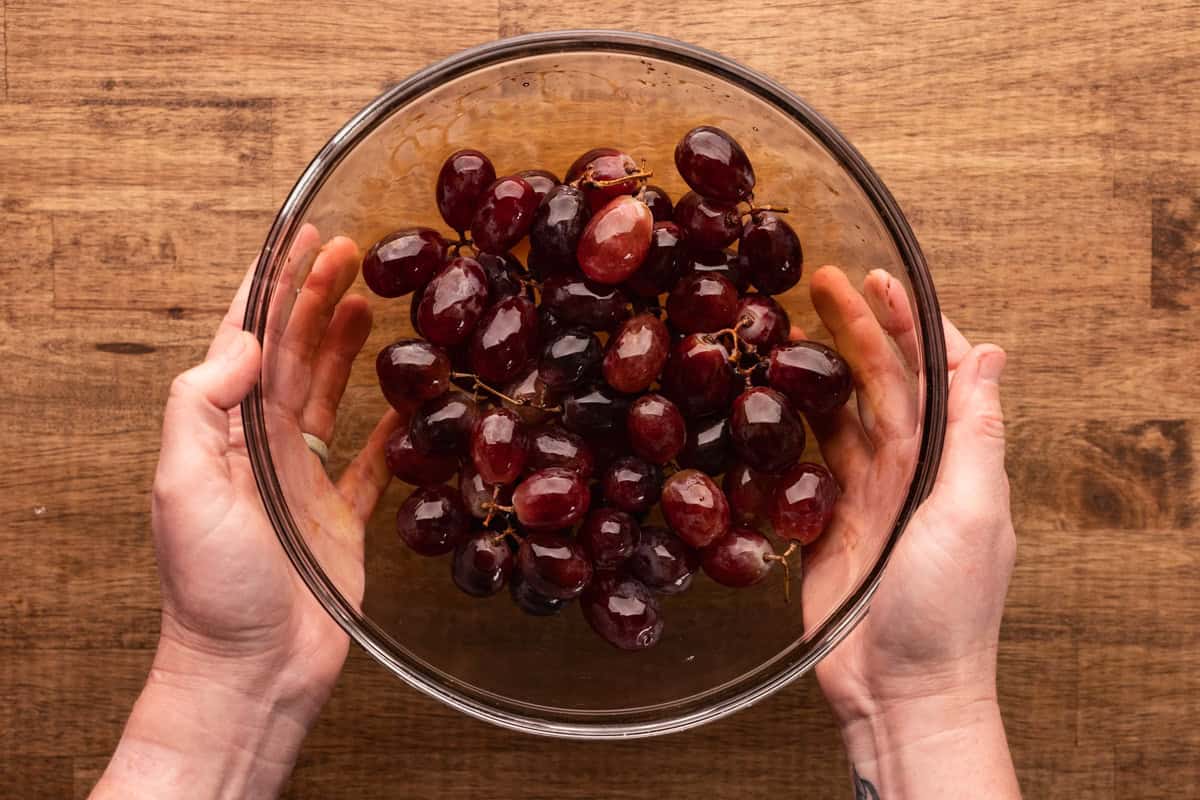
- Step 11: While the duck begins roasting, toss the grapes with balsamic vinegar.
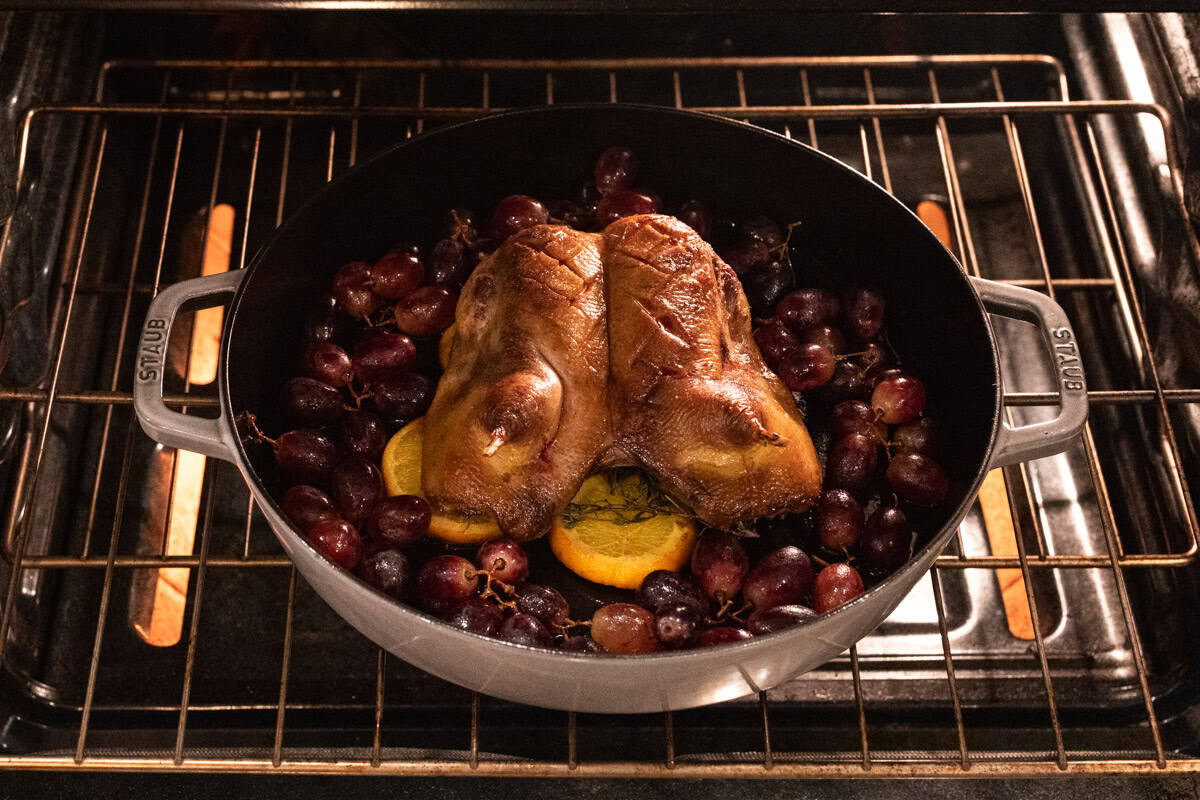
- Step 12: Arrange the grapes around the duck and return to the oven. Roast for another 25-30 minutes, or until the leg meat reaches an internal temperature of 160°F and the skin is golden brown and crispy.
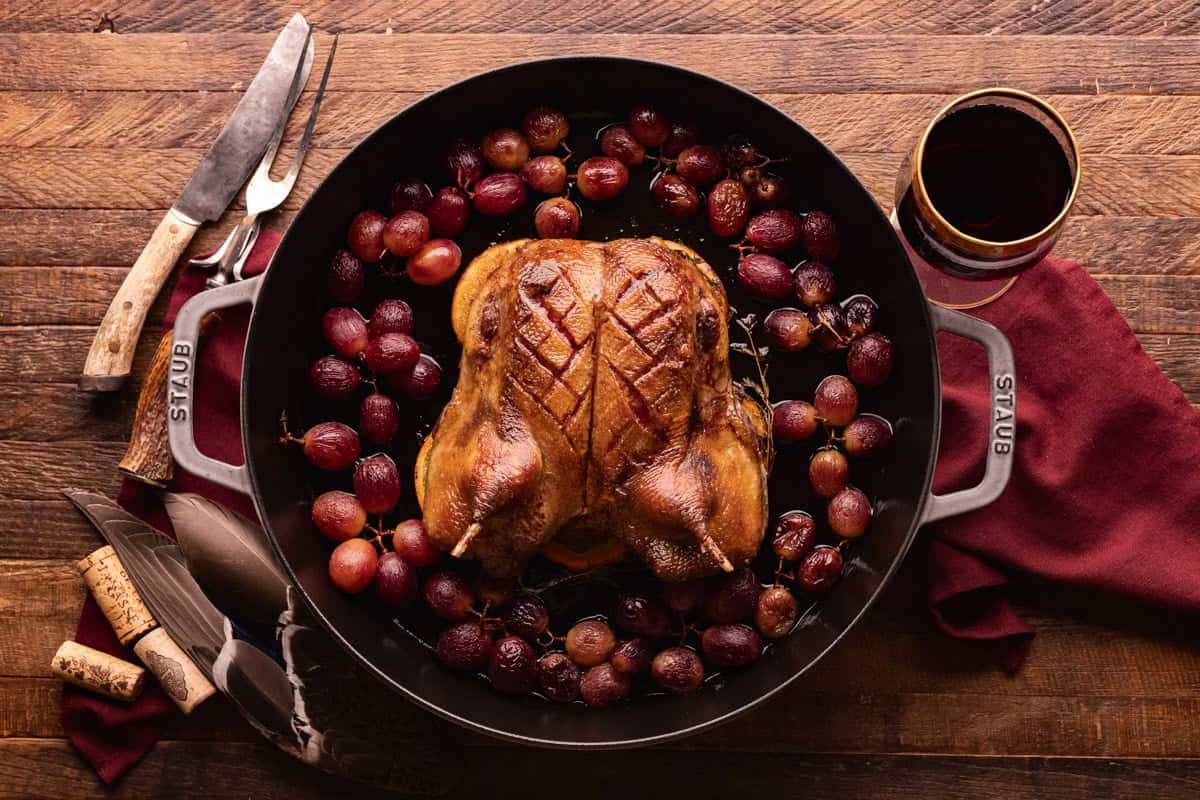
- Step 13: Let the duck rest for 10 minutes before carving. Finish with a sprinkle of flaky sea salt over the duck and grapes, if desired.
Pro Tips
- Dry skin is key. The uncovered fridge rest makes a big difference in crispiness.
- For larger, store-bought ducks, start roasting at 350°F for 15-20 minutes, then increase the oven temperature to finish crisping the skin.
What to Serve with Roasted Duck
This roasted duck pairs beautifully with simple sides that balance out the rich flavors of the duck. Try serving it with garlic green beans, rice pilaf, or a mix of simple roasted vegetables like carrots, parsnips, or Brussels sprouts.
A lightly dressed green salad with homemade honey mustard dressing also balances the richness nicely. Or take the richness up a notch and serve it with duck fat smashed potatoes!
Recipe FAQs
Brining isn't required, but it's highly recommended, especially for wild duck. A simple brine seasons the meat throughout, helps it stay juicy during high heat roasting, and improves the flavor. If you're short on time, you can skip the brine and simply season with salt and pepper, but the meat will be less seasoned and not quite as forgiving during cooking.
Spatchcocking and roasting at high heat is one of the best ways to achieve crispy skin and juicy meat without a long cooking time.
Skipping the skin-drying step, overcooking it, or not allowing enough fat to render are common issues.
A simple brine lets the natural flavor of the duck shine. Aromatics like thyme and citrus add subtle depth without overpowering the meat. After roasting, you can add some flaked sea salt to bring out the flavors even more.


Did you try this recipe?
Let us know what you thought by leaving a comment below and sharing it on Instagram, Facebook, and Pinterest!
Thank you!
Annie
📖 Recipe
Easy Roasted Duck Recipe with Grapes
Equipment
Ingredients
Duck + Brine
- 1 whole duck, bone-in, skin-on (about 2 lb)
- ½ cup kosher salt
- ¼ cup brown sugar
- 2 quart water
Other Ingredients
- 1 medium orange, sliced
- 1 lb red grapes
- 5-6 thyme sprigs
- 2 tablespoon balsamic vinegar
- flaked sea salt (optional, for serving)
Instructions
Spatchcock the Duck
- Place the duck breast-side down on a cutting board, with the backbone facing up. Using sharp kitchen or poultry shears, cut along one side of the backbone from neck to tail. Repeat on the other side and remove the backbone.
- Flip the duck over and press firmly on the breastbone until it cracks and the bird lies flat. Gently pull the legs outward so they extend fully.
- Optional: Flip the duck back over and secure the legs and wings by threading two skewers across the back in an "X" pattern: through one thigh, under the opposite wing, then repeat on the other side.
Brine the Duck
- In a large pot, combine the water, salt, and brown sugar. Bring to a boil, then remove from heat and let cool slightly. Transfer to a nonreactive container and cool to room temperature.
- Submerge the duck in the brine, cover, and refrigerate for 12 hours.
- Remove the duck from the brine, rinse under cold water, and place on a rack set over a sheet pan. Pat dry thoroughly, then refrigerate uncovered for 2-12 hours to help the skin dry.
Roast the Duck
- Remove the duck from the refrigerator and let it sit at room temperature for 30 minutes. Using a sharp knife, lightly score the skin and fat in a crosshatch pattern, being careful not to cut into the meat.
- Preheat the oven to 425°F. Lightly grease an enamel cast iron skillet or roasting pan with olive oil.
- Arrange the orange slices and thyme sprigs in the pan. Place the duck breast-side up on top and roast for 10 minutes.
- While the duck begins roasting, toss the grapes with balsamic vinegar.
- Arrange the grapes around the duck and return to the oven. Roast for another 25-30 minutes, or until the leg meat reaches an internal temperature of 160°F and the skin is golden brown and crispy.
- Let the duck rest for 10 minutes before carving. Finish with a sprinkle of flaky sea salt over the duck and grapes, if desired.
Notes
- This recipe is written for a 2-pound wild duck. For a larger, store-bought duck, start roasting at 350°F for 15-20 minutes, then increase the oven temperature to finish crisping the skin.
- A simple salt-and-sugar brine helps season the meat throughout and keeps it juicy during the high-heat roast. It also improves browning and flavor.
- Red or black seedless grapes work best. As they roast, they soften and burst, creating a sweet contrast to the rich duck. The grape juices blend with the duck drippings, creating an indulgent, sauce-like base.



Annie Weisz says
My favorite bite is a piece of duck with one of the roasted grapes. The way the sweet grapes mix with the rich duck and pan drippings just works!