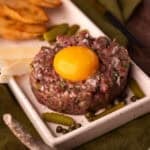

Venison Tartare
This venison tartare combines silky texture, fresh herbs, briny capers, and crisp shallots for a bright, balanced dish with rich wild flavor.
Servings: 4
Calories: 132kcal
Equipment
Ingredients
Meat + Mix-ins
- 10 oz venison backstrap, slightly frozen
- kosher salt and black pepper, to taste
- 2 tablespoon shallot, finely chopped
- 2 tablespoon brine from cornichon jar
- 2 tablespoon cornichons, finely chopped
- 1 tablespoon capers, finely chopped
- 1 teaspoon chives, finely chopped
- 1 teaspoon Italian parsley, finely chopped
- 1 teaspoon lemon zest
Sauce
- 1 tablespoon fresh lemon juice
- 2 teaspoon extra virgin olive oil
- 1 teaspoon dijon mustard
- 1 teaspoon Worcestershire sauce
Optional, for serving
- egg yolks
- flaked sea salt
- shaved parmesan cheese
- cornichons
- capers
- toasted baguette slices
Instructions
- Combine the shallots and cornichon brine in a small bowl and let them sit for 5 minutes while you prepare the remaining mix-ins.
- Drain the shallots, then place them in a chilled mixing bowl along with the other mix-ins. Refrigerate until needed.
- In a separate small bowl, whisk together all of the sauce ingredients. Refrigerate while you prep the venison.
- Place the slightly frozen venison backstrap on a clean cutting board and trim away any silver skin. Using a sharp knife, finely dice the venison into small, even pieces. Season with salt and pepper, then transfer the meat to the chilled bowl with the mix-ins.
- Drizzle the sauce over the meat and gently fold everything together until evenly combined, taking care not to mash the meat.
- Portion the tartare onto chilled plates or shape it using a ring mold. You can form it into 4 individual portions or 1-2 large portions for sharing. Top with an egg yolk, if desired, and finish with a pinch of flaked sea salt.
- Serve with shaved parmesan, extra cornichons, extra capers, and toasted baguette slices.
Notes
- Read the Food Safety tips in the recipe post.
- Backstrap is my go-to for raw dishes because of its clean location on the animal and naturally tender texture. Even though beef tartare is traditionally made from tenderloin, I avoid venison tenderloins for raw dishes due to their higher risk of contamination. If you don't have deer meat on hand, you can also make this recipe with elk, moose, antelope, etc. Another great option would be venison heart.
- Classic tartare mix-ins like shallots, capers, cornichons, fresh herbs, and lemon zest add brightness and texture that elevate the mild sweetness of venison. Feel free to adjust based on what you have or prefer.
- A fresh egg yolk adds creaminess and richness. If you're not comfortable using raw egg, you can skip it. The tartare will still be fantastic!
- Keep everything cold: Mixing bowls, serving plates, and ingredients.
- Dice the meat by hand for the best texture. Don't use a grinder.
- Taste and adjust salt and acidity right before serving.
- Serve immediately for the freshest flavor.
Nutrition
Calories: 132kcal | Carbohydrates: 2g | Protein: 22g | Fat: 4g | Saturated Fat: 1g | Polyunsaturated Fat: 0.3g | Monounsaturated Fat: 2g | Cholesterol: 56mg | Sodium: 292mg | Potassium: 321mg | Fiber: 0.4g | Sugar: 1g | Vitamin A: 33IU | Vitamin C: 3mg | Calcium: 11mg | Iron: 3mg
To see the web version with photos, tips and FAQs, scan the QR code or visit:
