

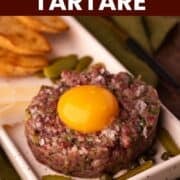
Venison tartare is all about unique texture and bright, balanced flavors. It's silky yet structured, savory with pops of acidity, and full of contrast. Bright herbs, briny capers, crisp shallots, and that unmistakable wild richness from venison backstrap. Every bite delivers a little crunch, a little saltiness, and a whole lot of bright flavor.

TL;DR
Venison tartare is absolutely doable, and incredibly delicious, when made with clean, high-quality meat and proper food safety practices. Keep the meat cold, use the right cut (backstrap, not tenderloin!), and mix in plenty of bright, crunchy ingredients to balance the richness. Serve with sourdough baguettes for the perfect appetizer!
Food Safety
Tartare is one of those dishes you should only make when you really trust your process. Raw venison can be incredible, but only if every step, from field to kitchen, is done right. Here's what matters most:
Clean Field Care: Food safety starts long before the kitchen. A clean shot, a quick recovery, a precise field dressing job, prompt cooling, and avoiding contamination from the guts, dirty game bags, the back of your truck, backpack, etc. make a huge difference in the safety and flavor of raw preparations. (and any recipe, really!)
Choose the Right Cut: Backstraps are ideal for tartare because their position on the animal keeps them shielded from the intestinal cavity, but they're still a tender cut. Tenderloins, while traditional for beef tartare, are not ideal for raw venison due to their proximity to the digestive tract and potential for contamination. Save the tenderloins for this venison tenderloin recipe.
Keep It Cold: Keep the meat cold from start to finish. Use venison that has been frozen below 0°F for at least 3 days and dice it while it's still partially frozen. This makes cutting easier and helps maintain a safe temperature.
Egg Yolks: Raw egg yolks can carry Salmonella, so they do present some risks. If you want the creamy texture they add, only use eggs from a trusted source, or use pasteurized eggs. You can also consider tempering the yolk by briefly whisking it with a small amount of acid (like lemon juice or vinegar) to slightly reduce risk.
Ingredients
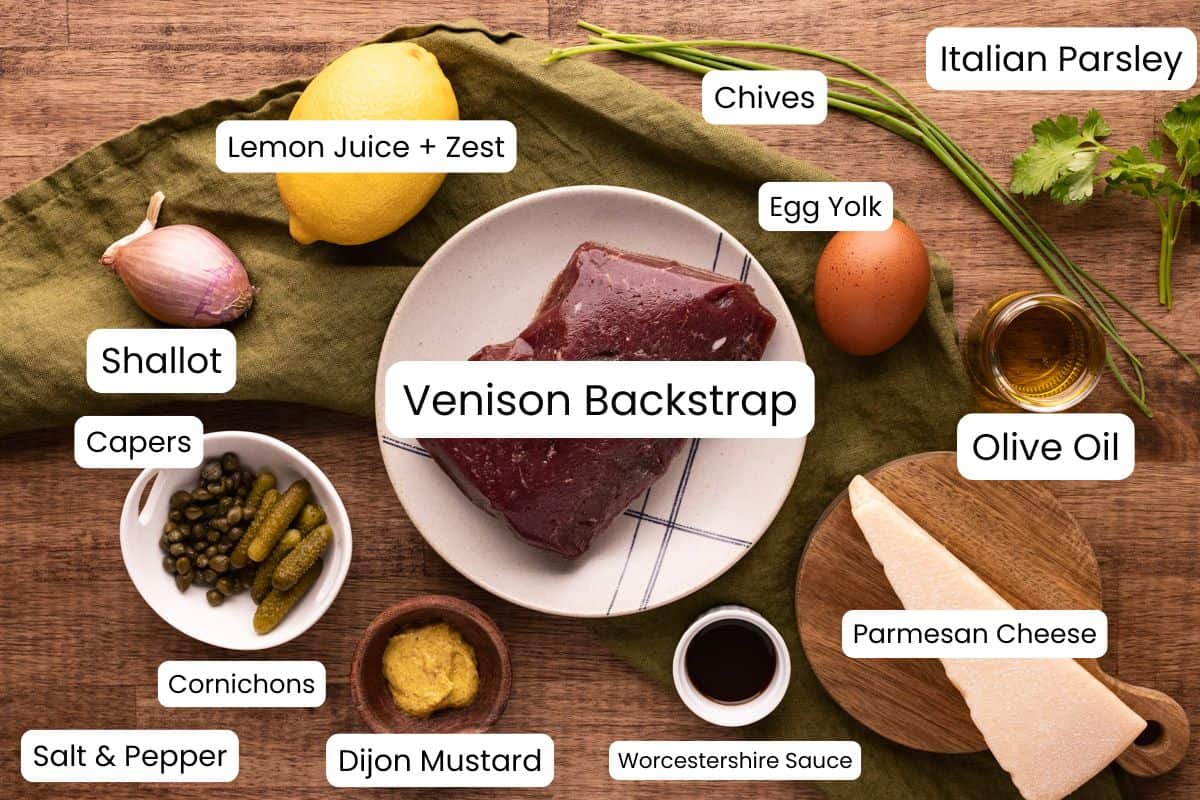
- Venison Backstrap: Backstrap is my go-to for raw and rare dishes (like my venison sashimi and venison tataki recipes) because of its clean location on the animal and naturally tender texture. Even though beef tartare is traditionally made from tenderloin, I avoid venison tenderloins for raw dishes due to their higher risk of contamination. If you don't have deer meat on hand, you can also make this recipe with elk, moose, antelope, etc. Another great option would be venison heart. If you're wary of eating heart raw, try this venison heart recipe instead.
- Mix-Ins: Classic tartare mix-ins like shallots, capers, cornichons, fresh herbs, and lemon zest add brightness and texture that elevate the mild sweetness of venison. Feel free to adjust based on what you have or prefer.
- Egg Yolk: A fresh egg yolk adds creaminess and richness. If you're not comfortable using raw egg, you can skip it. The tartare will still be fantastic!
See recipe card for quantities.
How to Make Venison Tartare
This recipe comes together quickly once all ingredients are prepped, so keep everything chilled and work efficiently.
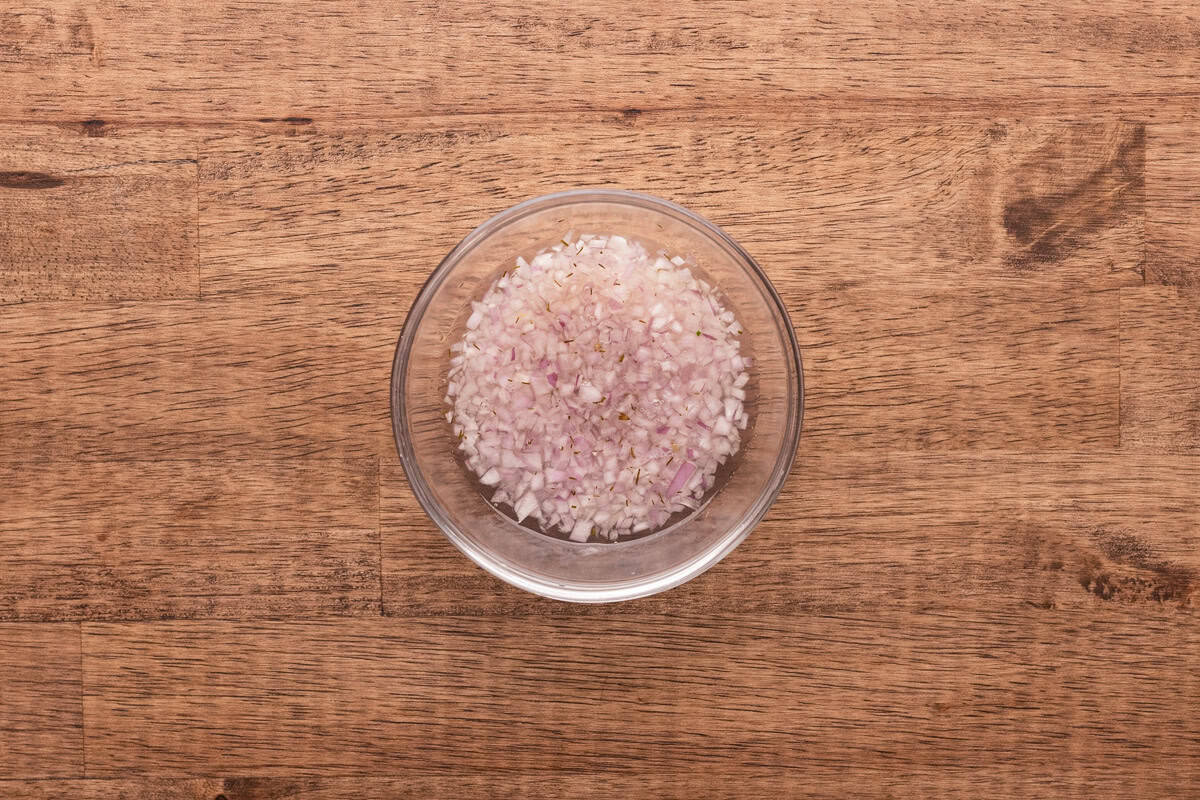
- Step 1: Combine the shallots and cornichon brine in a small bowl and let them sit for 5 minutes while you prepare the remaining mix-ins.
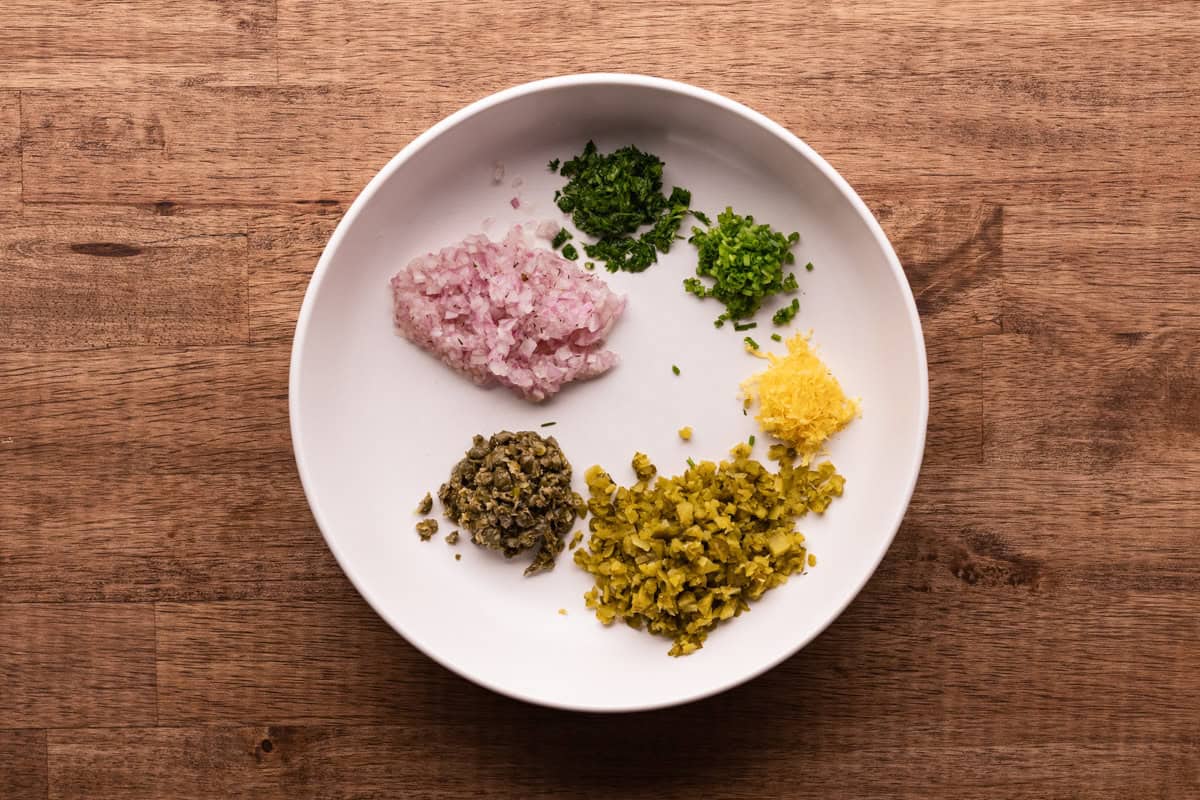
- Step 2: Drain the shallots, then place them in a chilled mixing bowl along with the other mix-ins. Refrigerate until needed.
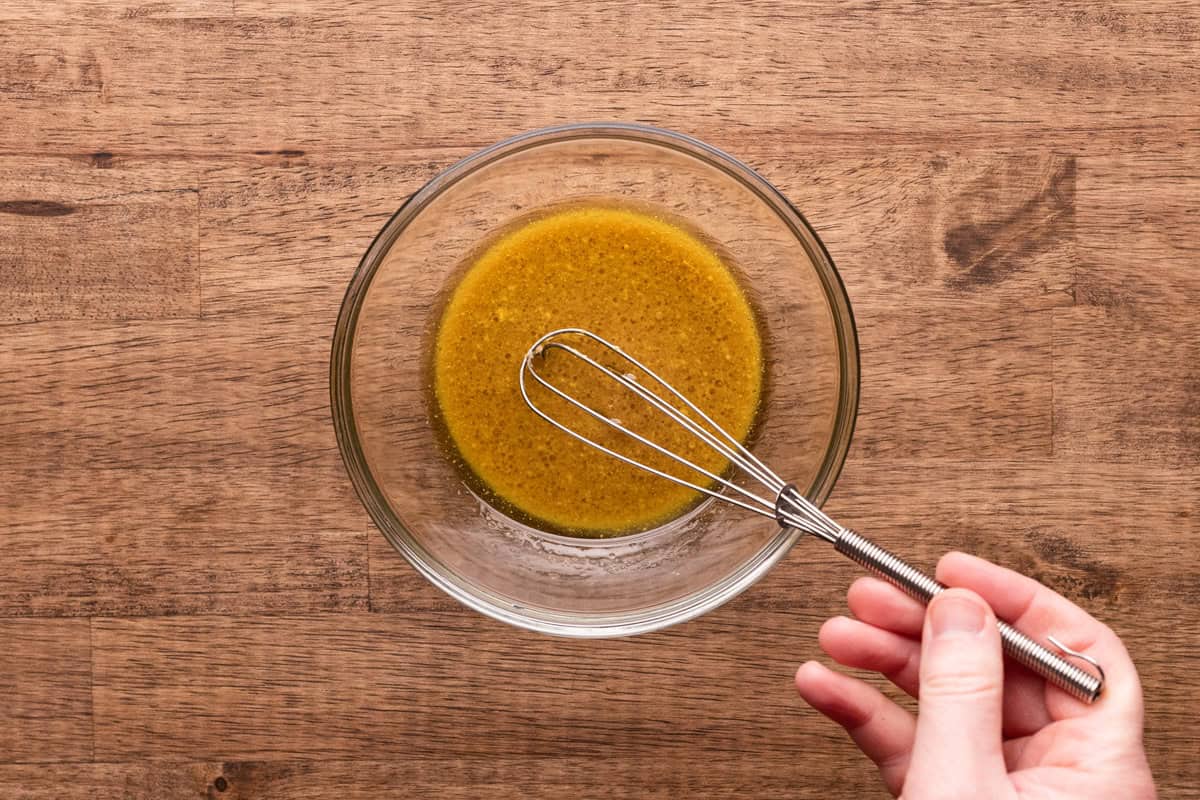
- Step 3: In a separate small bowl, whisk together all of the sauce ingredients. Refrigerate while you prep the venison.
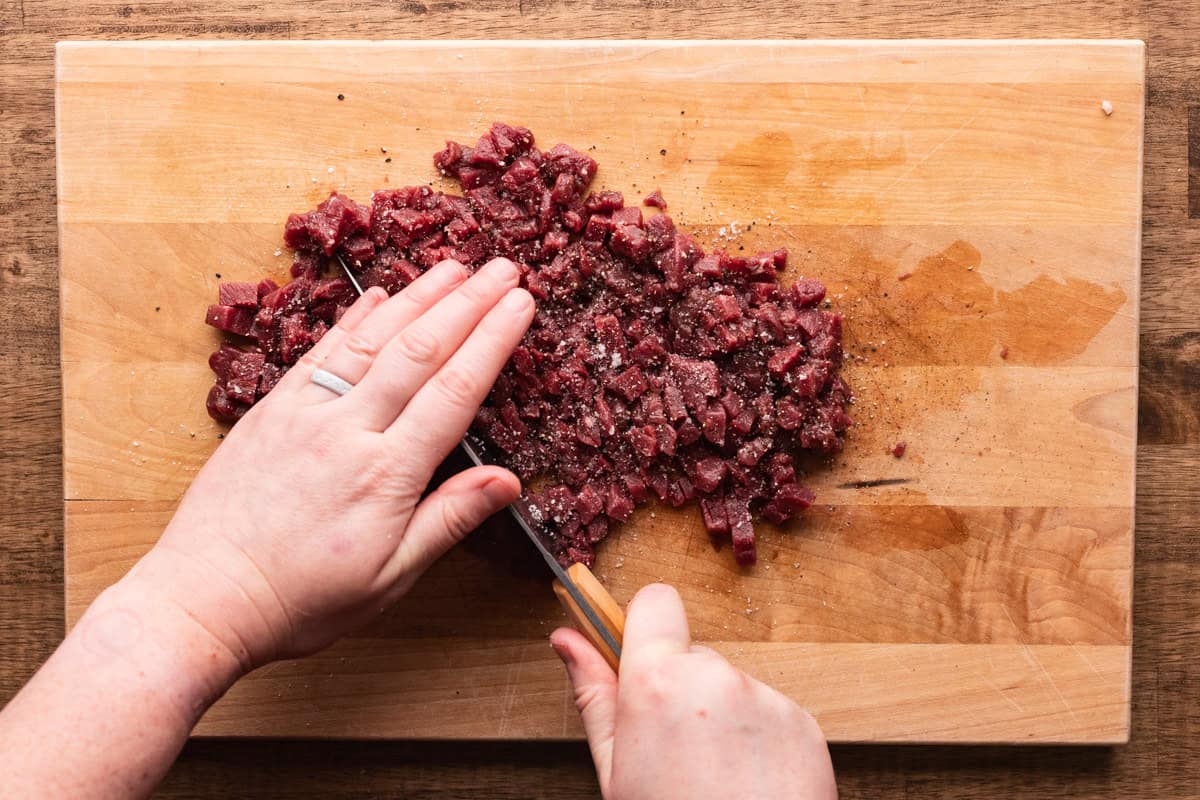
- Step 4: Place the slightly frozen venison backstrap on a clean cutting board and trim away any silver skin. Using a sharp knife, finely dice the venison into small, even pieces. Season with salt and pepper
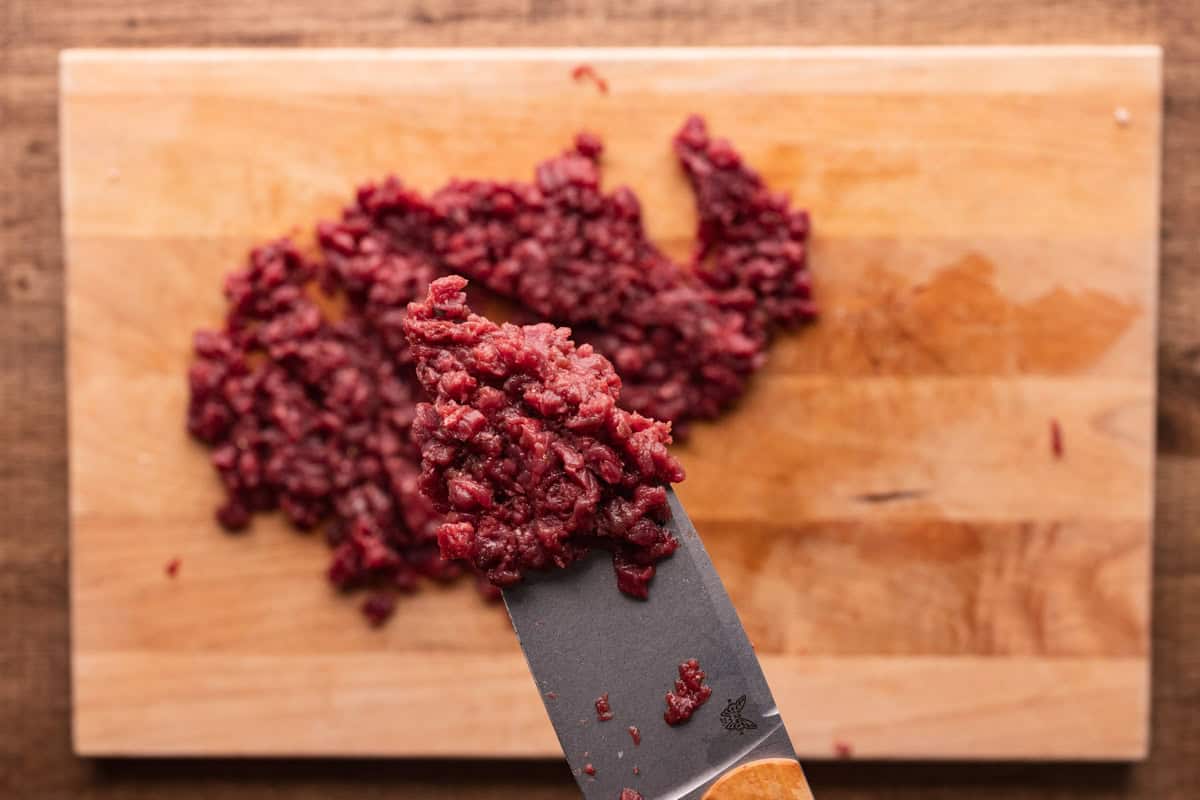
- Step 5: I like my tartare to be this consistency. You can leave bigger pieces or chop it finer if you prefer.
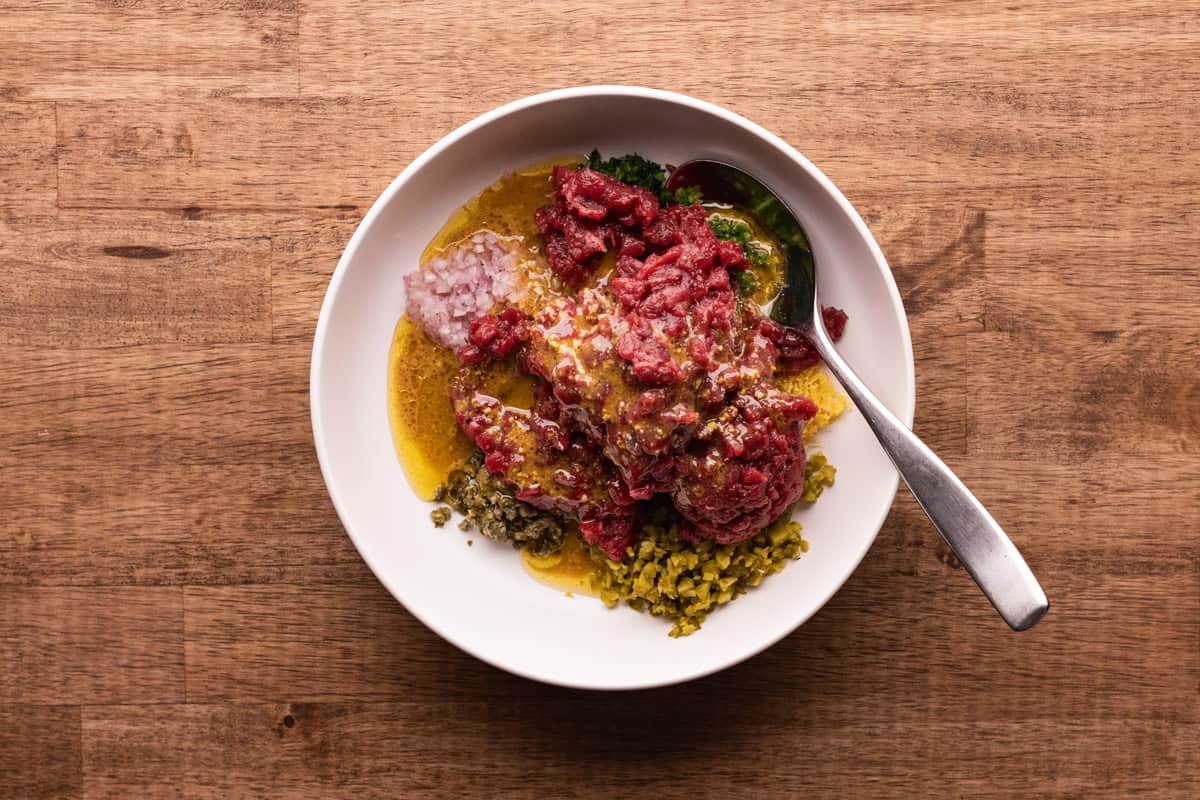
- Step 6: Transfer the meat to the chilled bowl with the mix-ins. Drizzle the sauce over the meat.
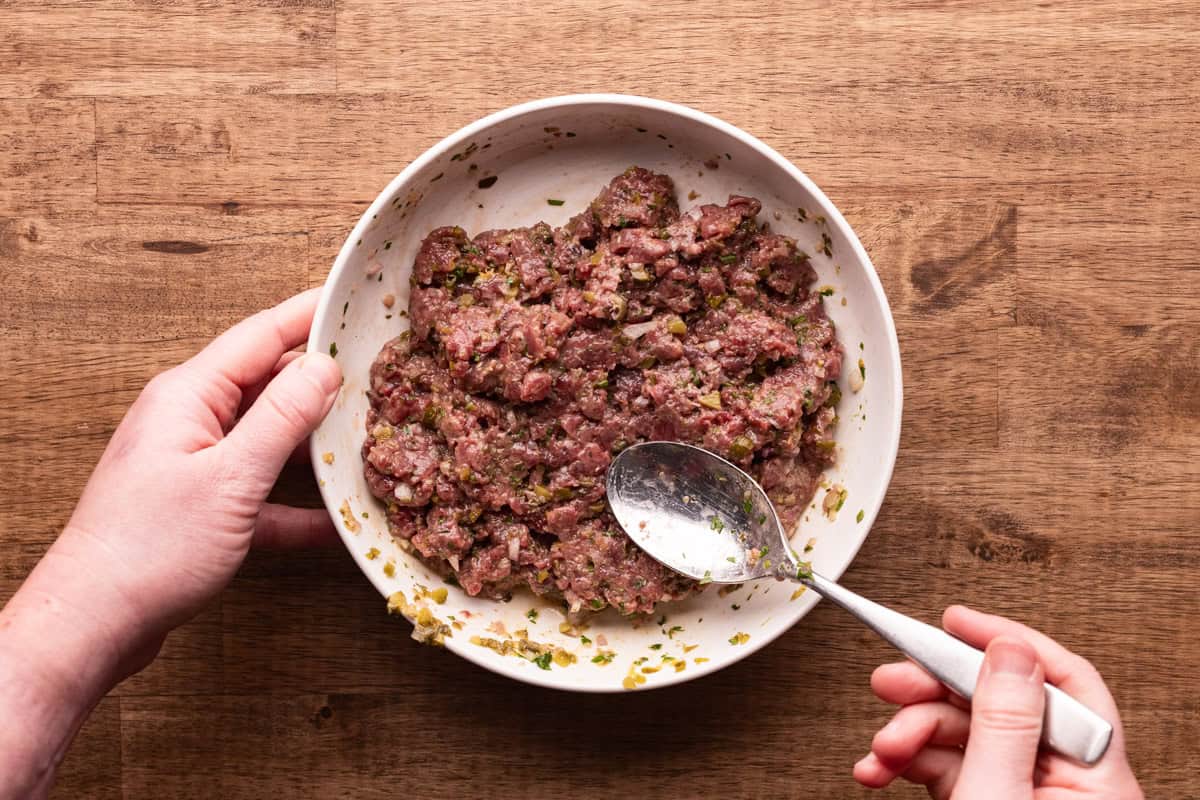
- Step 7: Gently fold everything together until evenly combined, taking care not to mash the meat.
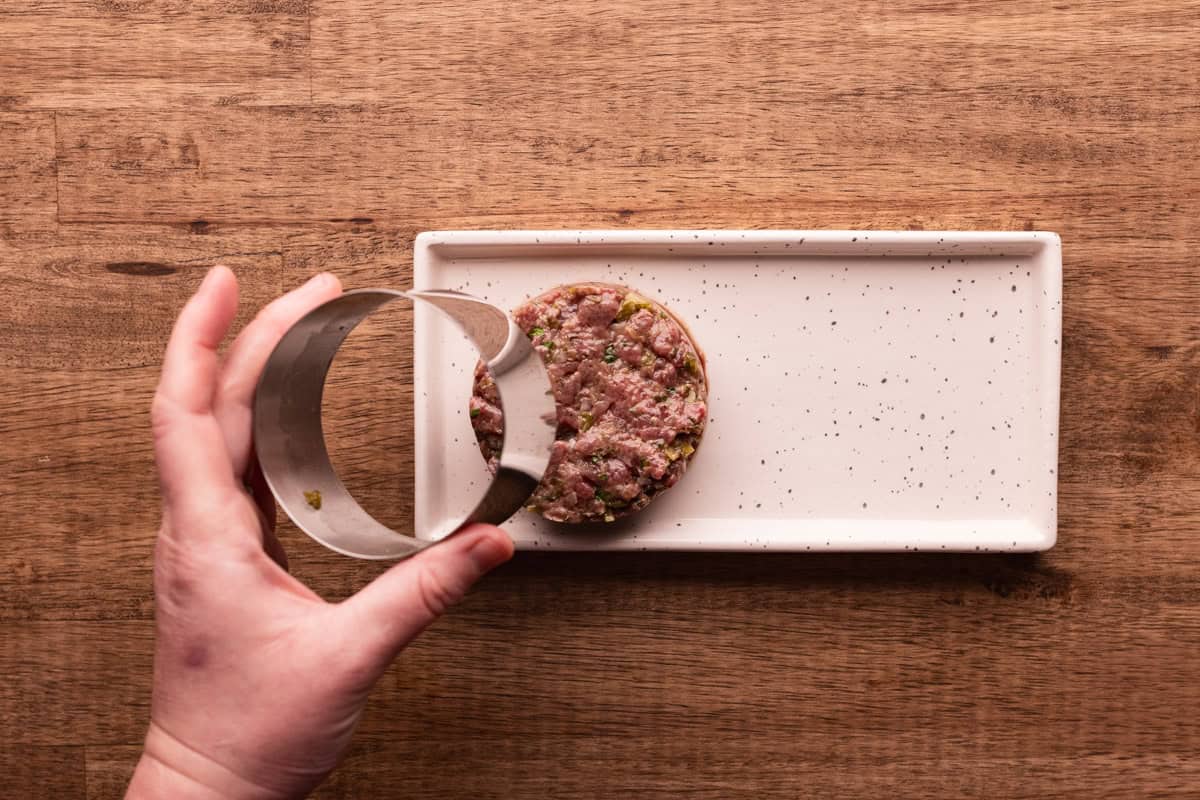
- Step 8: Portion the tartare onto chilled plates or shape it using a ring mold. You can form it into 4 individual portions or 1-2 large portions for sharing.
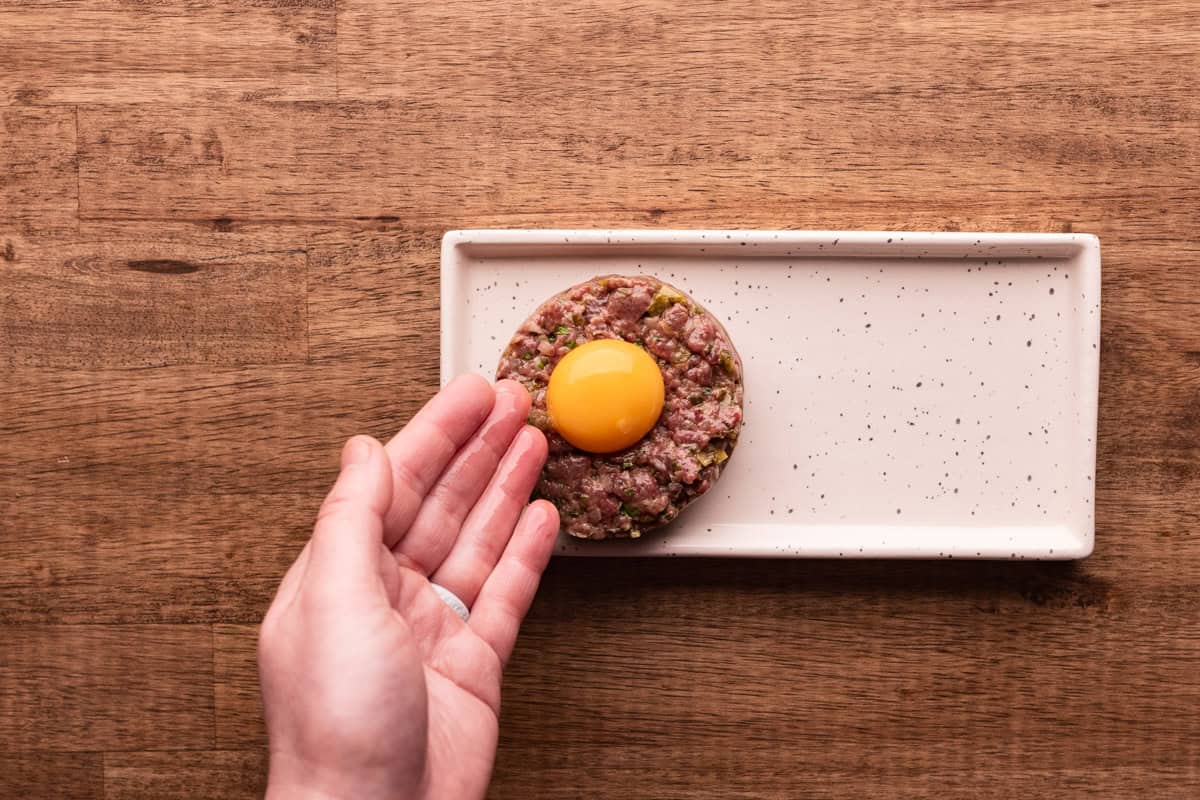
- Step 9: Top with an egg yolk, if desired, and finish with a pinch of flaked sea salt.
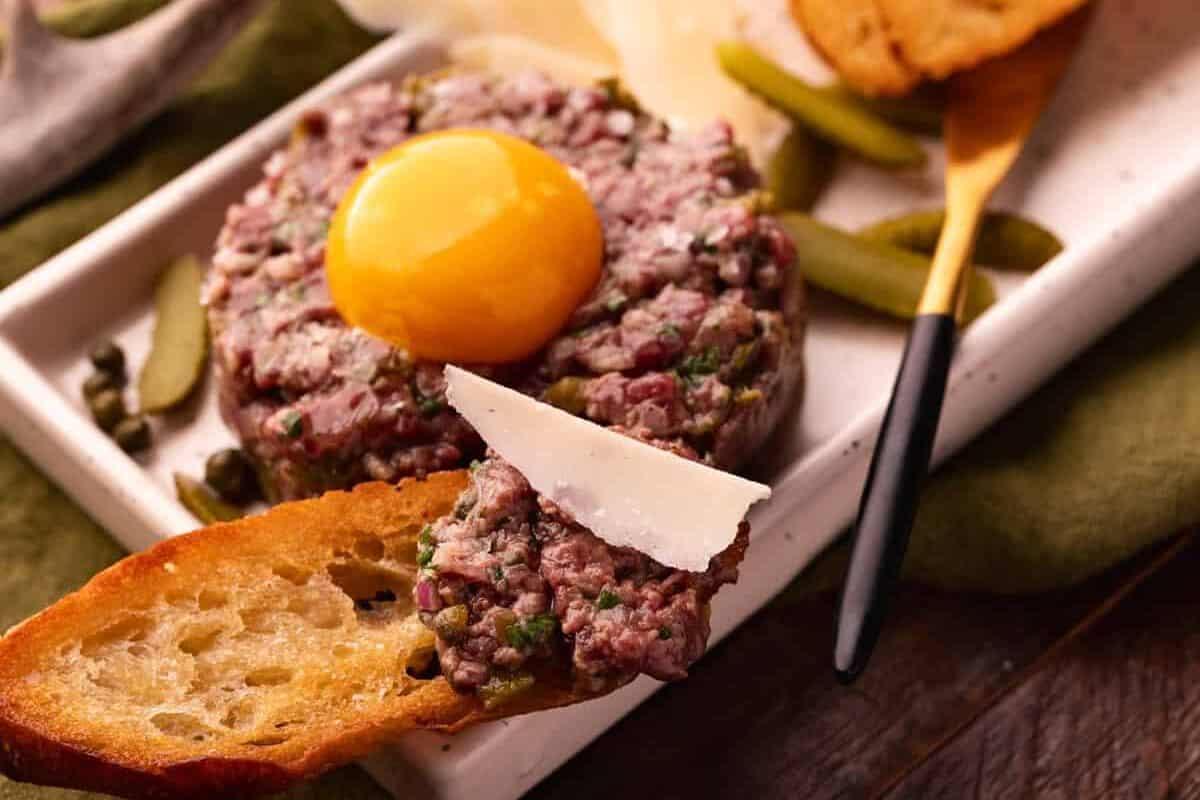
- Step 10: Serve with shaved parmesan, extra cornichons, extra capers, and toasted baguette slices.
Pro Tips
- Keep everything cold: Mixing bowls, serving plates, and ingredients.
- Dice the meat by hand for the best texture. Don't use a grinder.
- Taste and adjust salt and acidity right before serving.
- Serve immediately for the freshest flavor.
Variations
- Spicy Tartare: Add Calabrian chiles, chili crisp, or a pinch of red pepper flakes.
- Asian-Inspired: Swap lemon for rice vinegar, add sesame oil, and garnish with scallions.
- Smoky: Stir in a tiny splash of smoked soy sauce or smoked salt.
- Herb-Forward: Increase parsley and chives, and add fresh tarragon.
Storage
Tartare is best eaten immediately after mixing. Do not store leftovers. Once the meat warms up or sits for a period of time, the quality declines quickly.
Serving Suggestions
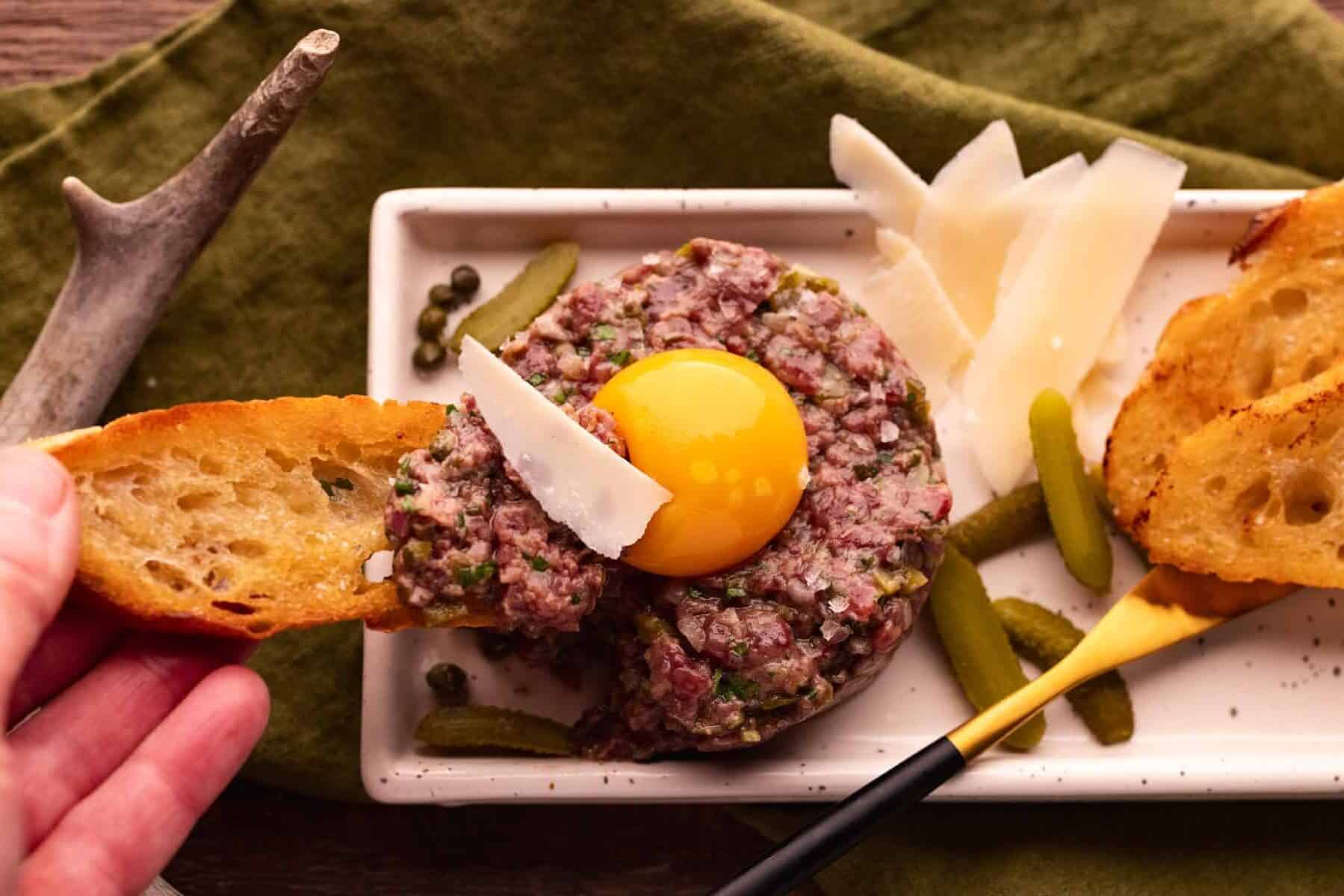
Venison tartare shines with simple, crisp, and salty accompaniments. Serve it with toasted sourdough baguette slices, or sturdy crackers. Add shaved parmesan for a salty, nutty bite, and a few extra capers or cornichons for brightness. For a full appetizer spread, pair it with venison crostini, smoked trout dip, and duck fat potatoes.
Recipe FAQs
Yes, if handled safely. Use high-quality backstrap, keep it cold, work clean, and follow proper field-to-fork practices.
Keep everything chilled, dice the meat finely and evenly, balance the richness with acidity and crunch, and serve immediately.
Using warm meat, using the wrong cut, over-mixing, under-seasoning, or letting the finished dish sit too long at room temperature before serving.


Did you try this recipe?
Let us know what you thought by leaving a comment below and sharing it on Instagram, Facebook, and Pinterest!
Thank you!
Annie
📖 Recipe

Venison Tartare
Equipment
Ingredients
Meat + Mix-ins
- 10 oz venison backstrap, slightly frozen
- kosher salt and black pepper, to taste
- 2 tablespoon shallot, finely chopped
- 2 tablespoon brine from cornichon jar
- 2 tablespoon cornichons, finely chopped
- 1 tablespoon capers, finely chopped
- 1 teaspoon chives, finely chopped
- 1 teaspoon Italian parsley, finely chopped
- 1 teaspoon lemon zest
Sauce
- 1 tablespoon fresh lemon juice
- 2 teaspoon extra virgin olive oil
- 1 teaspoon dijon mustard
- 1 teaspoon Worcestershire sauce
Optional, for serving
- egg yolks
- flaked sea salt
- shaved parmesan cheese
- cornichons
- capers
- toasted baguette slices
Instructions
- Combine the shallots and cornichon brine in a small bowl and let them sit for 5 minutes while you prepare the remaining mix-ins.
- Drain the shallots, then place them in a chilled mixing bowl along with the other mix-ins. Refrigerate until needed.
- In a separate small bowl, whisk together all of the sauce ingredients. Refrigerate while you prep the venison.
- Place the slightly frozen venison backstrap on a clean cutting board and trim away any silver skin. Using a sharp knife, finely dice the venison into small, even pieces. Season with salt and pepper, then transfer the meat to the chilled bowl with the mix-ins.
- Drizzle the sauce over the meat and gently fold everything together until evenly combined, taking care not to mash the meat.
- Portion the tartare onto chilled plates or shape it using a ring mold. You can form it into 4 individual portions or 1-2 large portions for sharing. Top with an egg yolk, if desired, and finish with a pinch of flaked sea salt.
- Serve with shaved parmesan, extra cornichons, extra capers, and toasted baguette slices.
Notes
- Read the Food Safety tips in the recipe post.
- Backstrap is my go-to for raw dishes because of its clean location on the animal and naturally tender texture. Even though beef tartare is traditionally made from tenderloin, I avoid venison tenderloins for raw dishes due to their higher risk of contamination. If you don't have deer meat on hand, you can also make this recipe with elk, moose, antelope, etc. Another great option would be venison heart.
- Classic tartare mix-ins like shallots, capers, cornichons, fresh herbs, and lemon zest add brightness and texture that elevate the mild sweetness of venison. Feel free to adjust based on what you have or prefer.
- A fresh egg yolk adds creaminess and richness. If you're not comfortable using raw egg, you can skip it. The tartare will still be fantastic!
- Keep everything cold: Mixing bowls, serving plates, and ingredients.
- Dice the meat by hand for the best texture. Don't use a grinder.
- Taste and adjust salt and acidity right before serving.
- Serve immediately for the freshest flavor.

Annie Weisz says
This is one of my favorite ways to enjoy really well-handled venison. I love serving it around the holidays as a special treat. It's simple, fresh, and full of flavor!